
Essential Remote Deposition Technology Law Firms Need
Technical failures disrupt testimony, accuracy, and credibility during critical virtual proceedings. Poor audio quality creates transcript errors that undermine case strategies. Video disruptions prevent proper witness credibility assessment during depositions. Connection instability causes testimony gaps that courts may reject completely.
Law firms must prepare remote deposition technology before virtual proceedings begin. Proper planning prevents technical problems that compromise legal documentation and case outcomes. Additionally, comprehensive checklists ensure attorneys address every critical technology requirement systematically.
CourtScribes serves as a trusted remote deposition provider with nationwide coverage and technical expertise. Our professional team helps law firms navigate remote deposition technology challenges effectively. Moreover, proper preparation protects case integrity while maintaining professional standards throughout virtual proceedings.
This comprehensive checklist guides litigation teams through essential remote deposition technology requirements.
Why Remote Deposition Technology Matters for Legal Proceedings
Technology issues can invalidate testimony or delay proceedings with serious consequences. Courts expect the same professionalism from virtual depositions as traditional in-person proceedings. Poor technical preparation reflects negatively on attorneys and damages professional credibility unnecessarily.
Remote deposition technology directly impacts accuracy, security, and reliability throughout virtual proceedings. Audio problems prevent accurate transcription of witness testimony and attorney questions. Video failures obscure facial expressions that affect credibility assessments during cross-examination. Furthermore, security vulnerabilities expose confidential case materials to unauthorized access and breaches.
Professional remote deposition technology ensures courts accept virtual testimony without admissibility challenges. Proper systems maintain documentation integrity that supports successful case outcomes and appeals. Therefore, technology preparation becomes as important as legal strategy development.
Core Technology Requirements for Remote Depositions
Foundational tools form the basis for successful virtual depositions and professional legal documentation. Law firms must establish comprehensive remote deposition technology systems before scheduling proceedings. Basic requirements include hardware, software, internet connectivity, and security protocols working together seamlessly.
Compatibility across platforms and participants prevents technical conflicts during live testimony. Different operating systems, browsers, and devices must function together without disruptions. Additionally, standardized technology ensures consistent quality regardless of participant locations or equipment choices.
Technology investments protect case outcomes while improving efficiency across virtual proceedings. Professional systems deliver reliability that courts and clients expect from modern legal practice. Moreover, proper infrastructure supports growing virtual litigation demands effectively.
Hardware Checklist for Law Firms
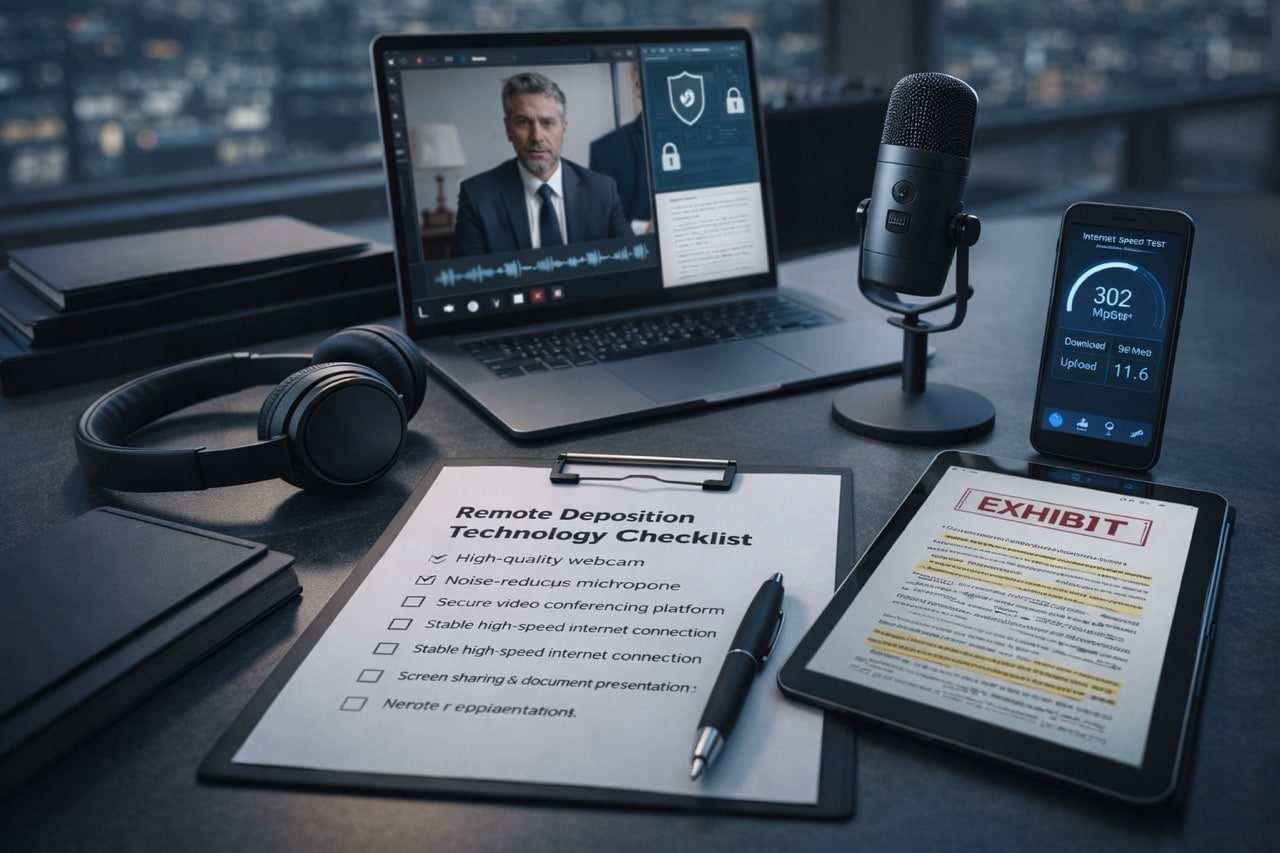
Essential hardware components ensure professional quality during remote depositions and virtual hearings:
- High-quality webcam captures clear facial expressions and witness demeanor for credibility assessment
- Noise-reducing microphone eliminates background distractions that compromise audio clarity and transcription accuracy
- Backup laptop or device provides immediate replacement if primary systems fail during proceedings
- Headphones for clear audio prevent echo problems and enable better hearing during complex testimony
- Reliable power source including backup batteries prevents unexpected shutdowns during critical moments
Professional remote deposition technology requires investment in quality hardware that delivers consistent performance.
Internet and Network Readiness
Network infrastructure determines connection stability throughout virtual proceedings:
- Stable broadband connection with minimum 10 Mbps upload speed for clear video transmission
- Wired connection preferred over WiFi to prevent interference and maintain consistent speeds
- Backup hotspot provides alternative internet access if primary connections fail unexpectedly
- Firewall compatibility testing ensures security systems don’t block necessary platform connections
- Speed test before deposition verifies adequate bandwidth for professional quality transmission
Remote deposition stability depends on reliable internet connectivity throughout entire proceedings. Virtual deposition connectivity problems create transcript gaps that compromise legal documentation quality.
Secure Platforms and Software Law Firms Must Use
Unsecured platforms risk confidentiality breaches that expose sensitive case materials to unauthorized parties. Professional remote deposition technology requires encryption that protects testimony during transmission and storage. Access controls limit participation to authorized case members through authentication protocols.
Audit logs track all platform access and file downloads for accountability and security monitoring. Secure platforms prevent unauthorized recording or screen capture by participants during proceedings. Additionally, professional software includes features specifically designed for legal documentation requirements.
CourtScribes uses only certified secure platforms that meet legal industry confidentiality standards. Our remote deposition technology includes bank-level encryption and multi-factor authentication throughout. Moreover, comprehensive security measures protect attorney-client privilege and work product doctrine completely.
Audio and Video Quality Standards for Remote Depositions
Poor audio undermines transcript accuracy by making testimony unclear or completely inaudible. Background noise, echo, and distortion create transcription errors that affect case preparation quality. Professional remote deposition technology ensures crystal-clear audio that supports accurate documentation consistently.
Video quality impacts witness credibility assessment by revealing facial expressions and body language. Low resolution prevents attorneys from observing hesitation, confidence, or discomfort during questioning. Additionally, poor lighting creates shadows that obscure important visual credibility indicators completely.
HD video standards maintain professional presentation quality that courts expect from legal proceedings. Clear audio enables accurate real-time transcription and reduces errors in final documentation. Therefore, quality standards form essential components of effective remote deposition technology systems.
Document and Exhibit Technology Requirements
Exhibit handling represents a critical technical responsibility during virtual depositions and hearings. Screen sharing must display documents clearly for all participants without resolution problems. File naming conventions prevent confusion about which exhibits witnesses reviewed during testimony.
Version control ensures attorneys present correct document versions during questioning and cross-examination. Remote deposition technology must support multiple file formats including PDFs, images, and videos. Additionally, exhibit marking systems create official records that courts accept as evidence.
Professional platforms enable seamless exhibit presentation that matches in-person deposition capabilities. Digital exhibit management maintains chain of custody for legal admissibility requirements. Moreover, secure storage protects confidential exhibits from unauthorized access after proceedings conclude.
The Role of Certified Court Reporters in Remote Technology
Court reporters monitor audio quality, speaker identification, and record integrity throughout virtual proceedings. They use remote deposition technology to create real-time transcripts that attorneys review immediately. Professional reporters flag audio problems before they compromise testimony documentation quality.
Certified reporters understand legal terminology and courtroom procedures that AI-only tools lack completely. They make judgment calls about unclear statements that automated systems cannot handle properly. Additionally, professional certification ensures transcripts meet court admissibility standards across all jurisdictions.
Remote deposition technology becomes most effective when combined with certified human expertise and oversight. Technology alone cannot replace professional judgment that maintains legal documentation integrity. Therefore, law firms should always engage certified court reporters for virtual proceedings.
Backup and Fail-Safe Technology Law Firms Should Have
Technical failure can invalidate testimony or create documentation gaps that compromise case outcomes. Redundancy planning ensures proceedings continue despite unexpected equipment or connection problems. Professional remote deposition technology includes multiple protective layers against failure.
Essential backup systems include:
- Secondary recording systems capture testimony if primary recording fails during proceedings
- Cloud backups prevent data loss through automatic secure storage during live sessions
- Redundant audio capture using multiple microphones ensures clear sound from all participants
- Immediate technical support provides expert assistance when problems arise during depositions
Fail-safe remote deposition technology protects against the most common technical problems law firms face.
How CourtScribes Supports Law Firms With Remote Deposition Technology
CourtScribes provides certified court reporters who manage remote deposition technology throughout virtual proceedings. Our professional legal videography captures witness credibility with broadcast-quality standards and equipment. Video-to-text synchronization links testimony moments to exact transcript locations for efficient preparation.
Secure access protects confidential materials through encrypted platforms and controlled permission systems. Nationwide coverage ensures consistent service quality regardless of case location or complexity. Additionally, technical support teams assist with platform setup and troubleshooting throughout proceedings.
Our comprehensive remote deposition technology eliminates common problems that law firms face during virtual litigation. Professional integration of hardware, software, and human expertise delivers superior results consistently.
Prepare With Confidence Using the Right Remote Deposition Technology
This checklist provides comprehensive guidance for law firms preparing virtual deposition systems. Proactive preparation prevents technical problems that compromise testimony accuracy and case outcomes. Professional remote deposition technology combined with certified court reporters ensures successful proceedings.
Contact CourtScribes today to schedule secure virtual depositions with complete technology support and professional documentation services.
📞 Toll-Free: 833-SCRIBES
📧 scheduling@courtscribes.com
📧 billing@courtscribes.com