
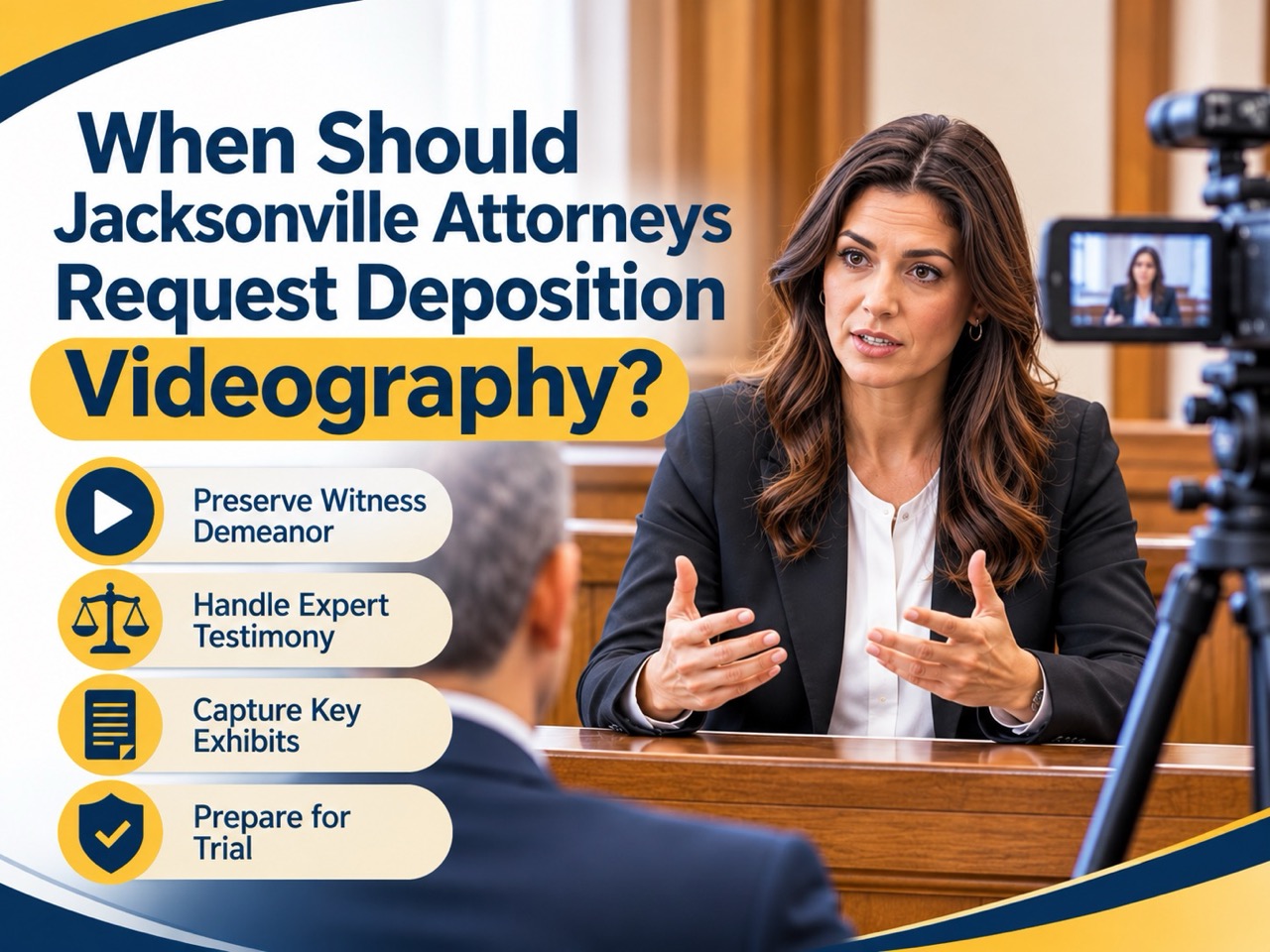
When Should Jacksonville Attorneys Request Deposition Videography?
A Jacksonville jury may never meet your best witness in person. A treating physician may be booked solid. An expert may live out of state. A key witness may be elderly or ill. In those moments, video often shapes how testimony lands at trial. Deposition videography captures tone, pauses, and demeanor that a transcript cannot show. The hard part is knowing when the extra cost pays off. This guide covers the Florida rules, the situations that call for video, and the tools that make footage useful. CourtScribes offers video deposition services in Jacksonville for attorneys across Duval County and Northeast Florida.
What Florida Rule 1.310 Requires for Video
Florida lets any party record a deposition on video without leave of court or a stipulation. Rule 1.310(b)(4) sets the conditions. The notice must state that the deposition will be audiovisually recorded and identify the operator. The deposition must also be recorded stenographically unless all parties agree otherwise. At the start, the officer must, on camera, identify the case, state the date, and swear the witness. The party requesting video bears the initial recording cost. That party’s attorney also safeguards the recording and lets opposing counsel view it. Pairing video with a Jacksonville court reporter covers both records. Check the current rule text, since the Florida Supreme Court amends these rules periodically.
When Florida Courts Allow Video at Trial
Rule 1.330 controls how depositions reach a Florida trial. Any party may use a deposition to contradict or impeach the deponent. A deposition may also be used for any purpose if the court finds the witness unavailable. Grounds include death, distance of more than 100 miles, being out of state, or illness. Florida adds a key exception. Under Rule 1.330(a)(3)(F), a court may allow the deposition of an expert or skilled witness. Rule 1.390 reinforces that point for experts, wherever they live. Federal Rule 32 has no matching expert exception. That gap matters in the Middle District of Florida’s Jacksonville Division. Plan deposition videography with the right court in mind.
When Video Earns Its Place: Situations and Tools
Not every deposition needs a camera. Some do, and skipping video can cost you at trial. The best time to decide is before you serve the notice. Each situation below pairs a common Jacksonville scenario with the tool that makes video useful. Use these as triggers when you plan deposition videography for your next case. Here are the moments when video earns its cost.
Medical Experts: Video-to-Text Synchronization
Personal injury and malpractice cases in Jacksonville often turn on physician testimony. Doctors rarely have open days for trial, so many attorneys preserve their testimony on video. Florida’s expert exception can let that deposition play at trial. Medical testimony runs long and technical, though. Video-to-text synchronization links each transcript line to the matching video moment. Your team can search a diagnosis or procedure and jump straight to the answer. That speeds up designations and clip editing. It also helps you spot confusing passages before the jury sees them. Order synchronization at booking, not after trial prep begins.
Out-of-State Witnesses: Remote Video Recording
Jacksonville cases often involve witnesses in Georgia, other states, or overseas. Florida Rule 1.310(b)(7) allows depositions by communication technology through stipulation or court order. The notice must name the technology and explain how to access it. Remote video works best with an independent recording rather than a basic platform recording. CourtScribes offers remote deposition videography through Zoom, Microsoft Teams, and Webex. Its team can capture the witness, counsel, and exhibits as separate streams when the setup supports it. That gives you cleaner footage for trial. Test audio and camera placement with the witness before the session starts.
Elderly or Ill Witnesses: Preservation Video
Some witnesses may not be available when trial arrives. Age, illness, or a planned move can take them out of reach. Rule 1.330 may allow their deposition at trial if the court finds them unavailable. A transcript read aloud loses much of its impact. Preservation video lets jurors see and hear the witness directly. Professional framing, lighting, and dedicated microphones matter here. Soft voices and long pauses need clear capture. Schedule these depositions early, while the witness can testify comfortably. When practical and agreed, choose a location that suits the witness, such as a home or care facility.
Credibility Disputes: Demeanor Capture
Some cases come down to who the jury believes. Text shows what a witness said. Video shows how the witness said it. Hesitation, evasive glances, and shifting answers can carry weight with fact finders. Under Florida Rule 1.330(a)(1), any party may use a deposition to contradict or impeach the deponent. A short video testimony clip often lands harder than a read transcript. Stable framing matters for these clips. Constant zooming or odd angles can draw objections and distract jurors. Ask your videographer for a consistent, neutral frame. Then index key answers by topic before cross-examination.
Corporate Representatives: Exhibit Capture
Commercial cases often feature corporate representatives answering questions about contracts, emails, and financial records. These depositions lean heavily on documents. Testimony about an exhibit makes little sense if viewers cannot see the page. CourtScribes can coordinate separate exhibit capture alongside witness video in Jacksonville depositions. That lets your team show the document and the answer together. Florida also lets an adverse party use a party’s deposition for any purpose. That includes an organization’s officers, managing agents, and designated representatives. Clear video of a corporate admission can become a strong trial exhibit. Pre-mark exhibits and share digital copies with the videographer early.
What a Trial-Ready Video Package Should Include
Good footage starts with the right equipment and process. A basic webcam recording rarely looks strong on a courtroom screen. Professional deposition videography follows a disciplined setup from the first frame to final delivery. Each piece affects how easily your team can review, edit, and present testimony. Ask your provider about each item below before you book. Here is what a trial-ready video deposition package should include:
- HD camera with stable framing. A fixed, neutral shot keeps attention on the witness.
- Dedicated microphones. Lapel or table mics capture each speaker clearly.
- Live audio monitoring. The videographer catches problems before testimony moves on.
- On-camera opening. The officer identifies the case, states the date, and swears the witness.
- Timestamped files. Time codes make syncing and clip editing faster.
- Secure digital delivery. Controlled access protects confidential testimony.
- Trial-ready formats. Files should work with your trial presentation software.
When Video May Not Be Worth the Cost
Video adds cost, and Florida places the initial expense on the party requesting it. Some depositions do not justify that spend. A short records custodian deposition rarely needs a camera. Routine discovery depositions of minor fact witnesses may work fine with a transcript alone. Cases likely to settle early may not need trial-ready footage. Still, weigh the risk before you skip it. You cannot go back and record demeanor after the deposition ends. If a witness may become unavailable, or credibility may matter, deposition videography often earns its cost. When unsure, discuss the case with your reporting provider before serving the notice. A short call can save a costly gap later.
Booking Checklist for Jacksonville Attorneys
Planning prevents most video problems. Jacksonville depositions can happen downtown, in Southside, at the Beaches, or across Clay and St. Johns counties. Location, witness needs, and court rules all shape the setup. A short call with your provider covers most details. Early booking also gives the team time to test equipment and plan exhibits. Use this checklist before you serve notice and book your next video deposition:
- Confirm the court. State and federal rules treat expert depositions differently.
- Update the notice. State that video will be used and identify the operator.
- Book a court reporter too. Florida requires stenographic recording unless all parties agree otherwise.
- Request synchronization. Ask for synced files when you book.
- Choose the location. Pick a quiet room with good lighting and power access.
- Plan remote access. Secure a stipulation or order for communication technology.
- Organize exhibits. Pre-mark documents and send digital copies early.
Plan Your Next Video Deposition With CourtScribes
So, when should Jacksonville attorneys request deposition videography? Request it when an expert may testify by deposition or a witness may become unavailable. Request it when credibility could decide the case or exhibits drive the testimony. The right tools then turn footage into trial-ready evidence. CourtScribes combines legal videography, court reporting, synchronization, and secure 24/7 transcript access across Duval County and Northeast Florida. Call 833-SCRIBES (727-4237) or schedule your Jacksonville video deposition today. Our team will help you plan the recording around your case and the rules of your court.
CMS Law Group
12955 Biscayne Blvd. Suite 201
North Miami, FL 33181
(866) 345-2033
info@cmslawgroup.com