
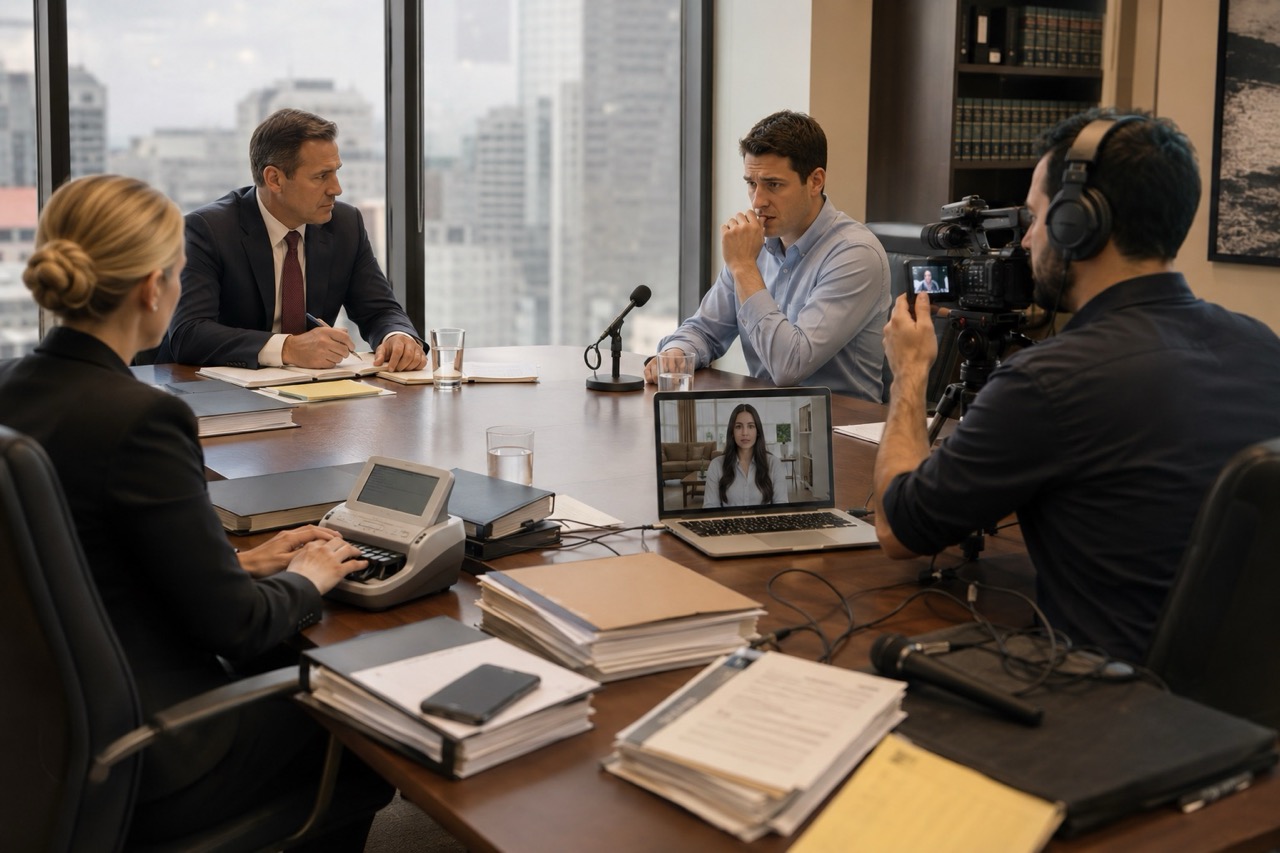
Common Deposition Mistakes That Delay Litigation
A deposition gone wrong does not just waste a morning. It can set a case back by weeks. Attorneys, paralegals, and legal teams invest significant time preparing for depositions. But preparation gaps, technical failures, and procedural missteps still occur. When they do, the consequences ripple through the entire litigation timeline. This blog covers the most common deposition mistakes that delay litigation, why they happen, and what legal teams can do to prevent them. Whether you are handling your tenth deposition or your hundredth, these are the areas worth reviewing before every session.
Mistake 1: Failing to Prepare the Witness Properly
Unprepared witnesses create problems that no amount of attorney skill can fully fix. A witness who does not understand deposition protocol answers questions in ways that create confusion, open new lines of inquiry, or produce testimony that contradicts prior statements. That inconsistency takes time to address, either through additional sessions or corrective motions.
What Proper Witness Preparation Covers
Preparing a client for a deposition involves more than reviewing the facts. Witnesses need to understand:
- How to listen to each question before answering
- Why short, direct answers protect their position
- What to do when they do not understand a question
- How deposition testimony can be used at trial
Skipping this preparation creates deposition mistakes that attorneys spend hours correcting after the fact.
Mistake 2: Poor Exhibit Organization
Exhibits derail depositions faster than almost any other factor. When exhibits are not labeled, numbered, or organized in advance, attorneys waste time searching for documents during live testimony. Witnesses lose focus. Opposing counsel spots the disorganization and uses it to their advantage.
Before the Deposition
- Number every exhibit in the order you expect to introduce it
- Create a reference sheet with exhibit numbers and descriptions
- Confirm all parties have received copies in advance when required
- Store digital exhibits in a secure, easily accessible platform
During the Session
- Introduce each exhibit clearly by number before referencing it
- Give the witness time to review before asking questions about it
- Track every exhibit introduced and maintain a running log
Disorganized exhibits are a preventable source of delays. A structured approach protects the flow of the proceeding from start to finish.
Mistake 3: Ignoring Technical Setup for Remote Depositions
Remote depositions have become standard practice. But many deposition mistakes now originate in the technical setup, or the lack of one. A poor internet connection drops the feed mid-testimony. A malfunctioning microphone makes audio unusable for transcription. A camera positioned incorrectly captures only part of the witness. Each of these problems either interrupts the session or produces a record that requires correction. Remote deposition services should include verified technical setup before the session begins. Legal teams that treat remote depositions as informal fail to protect the integrity of the record.
Remote Deposition Technical Checklist
- Test internet connection and have a backup hotspot ready
- Confirm camera angle captures the witness clearly
- Check microphone audio quality before participants join
- Verify platform access for all participants in advance
- Confirm court reporting and videography setup is active
Technical failures during active testimony create transcript gaps. Those gaps require follow-up sessions that push the litigation timeline back significantly.
Mistake 4: Asking Compound or Vague Questions
Question quality directly affects testimony quality. Compound questions ask two things at once. Vague questions produce vague answers. Both create deposition mistakes that damage the record. When a witness answers a compound question, it is unclear which part they are responding to. Opposing counsel objects. The answer gets struck. The attorney rephrases and starts again. Meanwhile, the proceeding slows and the transcript fills with unusable exchanges.
How to Structure Deposition Questions Effectively
- Ask one question at a time
- Use plain language the witness can understand clearly
- Avoid questions that assume facts not yet in evidence
- Follow up on incomplete answers before moving to the next topic
Commonly asked deposition questions follow a logical structure for a reason. That structure protects the record and keeps the proceeding moving forward without unnecessary interruptions.
Mistake 5: Skipping Video Recording
Some legal teams skip video recording to reduce cost or simplify logistics. This is one of the most consequential deposition mistakes an attorney can make. A written transcript captures words. It does not capture hesitation, tone, contradictory body language, or the moment a witness visibly struggles with a question. These elements matter significantly during trial preparation and cross-examination. Video depositions create a complete record that the transcript alone cannot provide. If a witness becomes unavailable before trial, the video recording may be the only way to present their testimony to a judge or jury.
What Video Recording Adds to the Record
- Captures nonverbal communication and witness demeanor
- Preserves testimony for use when witnesses are unavailable at trial
- Strengthens cross-examination preparation
- Supports more effective courtroom presentations
The cost of skipping video is almost always higher than the cost of including it.
Mistake 6: Not Following Video Deposition Best Practices
Recording a deposition on video is not enough on its own. How the video is set up and managed affects its value as a legal tool. Poor lighting, background noise, and incorrect camera positioning all reduce the quality of the recording. A low-quality video may be difficult to use effectively at trial even if the content is strong. Video deposition best practices cover the technical and procedural standards that produce a usable, professional record.
Key Video Deposition Standards
- Use a certified legal videographer rather than a general camera operator
- Position the camera at eye level with the witness
- Ensure the room has adequate, consistent lighting
- Minimize background noise and visual distractions
- Confirm audio capture is clear from every participant position
A professionally recorded deposition video holds up during trial presentation. A poorly recorded one creates credibility problems before testimony even begins.
Mistake 7: Missing or Delayed Transcript Delivery
The deposition ends. The legal team needs the transcript to move forward with motions, expert preparation, or additional discovery. The transcript arrives three days late. That delay pushes everything back. Deadlines get missed. Preparation suffers. Late transcript delivery is a deposition mistake that often traces back to the court reporting service rather than the legal team.
Choosing a service with reliable, expedited delivery options protects the litigation timeline from this specific risk. CourtScribes provides fast transcript turnaround and 24/7 secure access to all case files through a private online repository. The transcript is available the moment it is certified. Legal teams do not wait for email delivery or business hours to access what they need.
Mistake 8: Failing to Manage Speaker Identification in Multi-Party Sessions
Complex depositions involve multiple attorneys, witnesses, and sometimes interpreters. When the transcript does not clearly identify who said what, the record becomes difficult to use. This problem is especially common in remote depositions where participants join from different locations and audio quality varies. Overlapping dialogue, similar voices, and connection delays all create speaker identification challenges.
How to Prevent Speaker Identification Problems
- Require every participant to state their name clearly at the start
- Establish a protocol for how objections are raised and recorded
- Work with a court reporting service that actively manages speaker identification
- Confirm that the transcript format includes clear, consistent speaker labels
A transcript with unclear speaker attribution creates disputes about what was said and who said it. Resolving those disputes takes time that active litigation cannot afford to lose.
Mistake 9: Not Reviewing the Transcript After Delivery
Many legal teams receive a transcript and move directly to the next task without reviewing it carefully. Errors that go unnoticed in the transcript can resurface during trial at the worst possible moment. A misattributed statement, an incorrect proper noun, or a formatting error may not seem significant during document review. It can become significant when opposing counsel references it in a motion or at trial.
Transcript Review Checklist
- Verify speaker labels match the participants in the proceeding
- Confirm all proper nouns, case names, and legal terms are correct
- Check that exhibits are referenced accurately in the text
- Note any sections that require clarification or correction
Catching errors early prevents the kind of disputes that require additional proceedings to resolve.
Mistake 10: Choosing the Wrong Court Reporting Partner
Every deposition mistake on this list becomes more likely when the court reporting service is not up to the task. A reliable court reporting partner brings professional equipment, certified reporters, fast turnaround, and organized file management to every session. An unreliable one creates the exact problems this blog has outlined, from poor audio capture to late transcripts to inadequate remote support.
CourtScribes provides AI-powered court reporting, professional legal videography, remote deposition support via Zoom, video-to-text synchronization, and secure 24/7 access to transcripts and exhibits. National coverage means your team gets consistent, high-quality service regardless of where the deposition takes place.
Protect Your Litigation Timeline Starting With the Next Deposition
Deposition mistakes are preventable. Most of them come down to preparation, the right tools, and the right professional support. Every session your team prepares carefully and executes well keeps the litigation timeline intact. Every avoidable mistake costs time that is difficult to recover. CourtScribes is built to help legal teams avoid every mistake covered in this blog. Schedule your next deposition with CourtScribes today.
 Toll-Free: 833-SCRIBES
 scheduling@courtscribes.com billing@courtscribes.com