
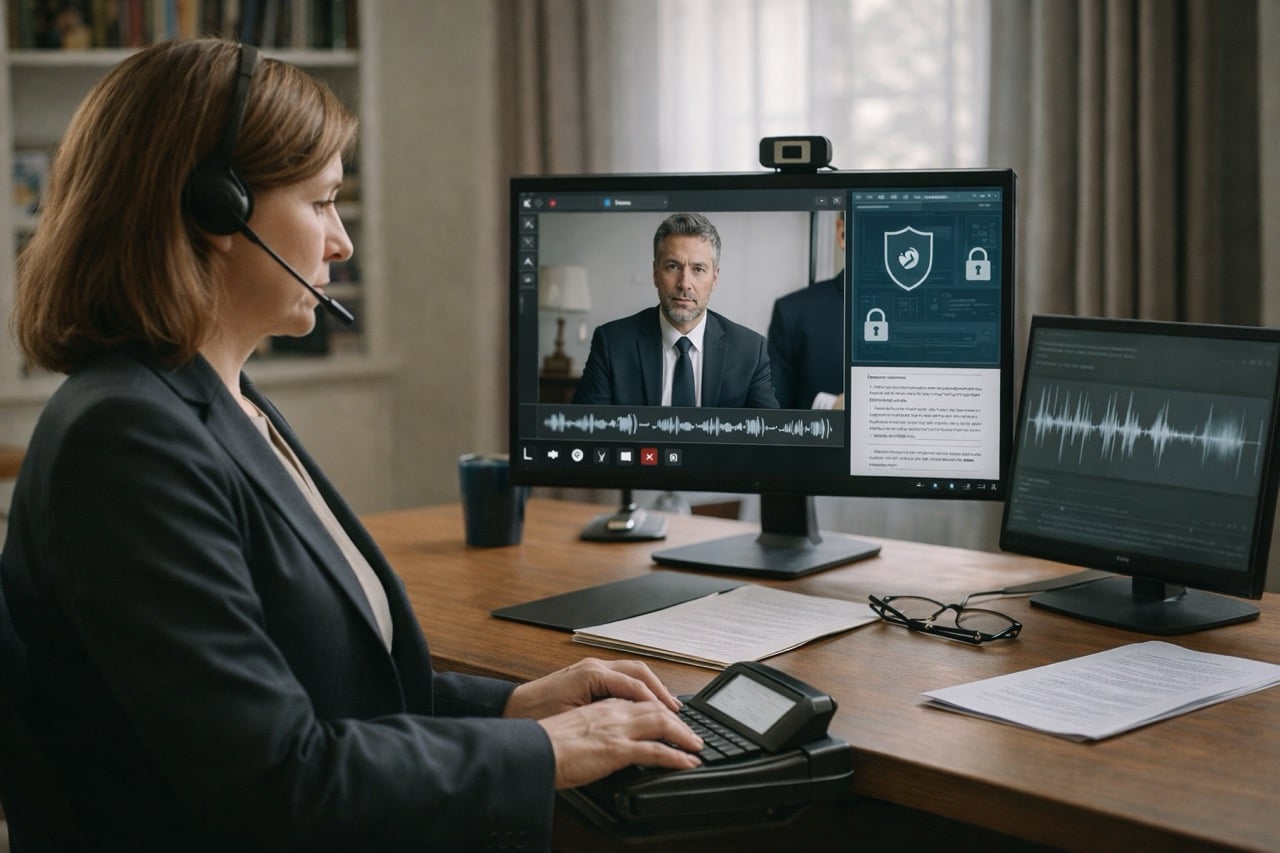
The Role of a Remote Court Reporter in Virtual Depositions
Court reporters remain essential in virtual proceedings despite technological advances that reshape legal documentation. Remote depositions create accuracy and credibility risks that only certified professionals can address effectively. Virtual environments introduce technical challenges that compromise transcript quality without proper oversight.
Legal standards remain identical regardless of deposition format or location. Courts require the same accuracy from remote testimony as traditional in-person proceedings. Additionally, CourtScribes provides certified remote court reporter services that maintain professional standards nationwide.
Professional documentation protects case integrity through human expertise combined with advanced technology. Understanding what remote court reporters do helps attorneys appreciate their critical role.
Why Court Reporters Are Still Required in Remote Depositions
AI-only tools are not court-admissible because they lack professional verification and certification standards. Automated transcription misses contextual nuances that affect testimony meaning and legal interpretation. Accuracy, neutrality, and certification remain mandatory for legal proceedings regardless of virtual format.
A remote court reporter carries legal responsibility for creating official records that courts accept. Professional certification demonstrates competence that automated systems cannot replicate through algorithms alone. Moreover, court reporters maintain neutrality that prevents bias from affecting transcript content.
The official record preserves complete testimony for appeals and future legal proceedings. Only certified professionals create documentation that meets courtroom admissibility requirements nationwide.
Before the Remote Deposition Begins
A remote court reporter handles extensive preparation tasks before testimony starts. Technology checks verify audio quality, video clarity, and platform functionality for all participants. Identity verification confirms that witnesses and attorneys are authorized case participants.
Swearing in the witness establishes legal authority for testimony under oath remotely. The reporter confirms all parties and appearances for the official record documentation. Additionally, preliminary technical coordination prevents disruptions during critical testimony moments. Professional preparation ensures smooth proceedings that capture accurate testimony from the start. These preliminary steps establish the foundation for legally admissible transcripts.
What Court Reporters Do During Live Remote Testimony
Overlapping speech and technical glitches can ruin transcripts without professional intervention and management. A remote court reporter provides real-time transcription that captures testimony as witnesses speak. Speaker identification ensures clear attribution of statements to specific individuals throughout proceedings.
Managing interruptions requires professional judgment about when clarification becomes necessary for accuracy. Flagging unclear testimony protects transcript integrity by noting when audio becomes inaudible. Moreover, professional reporters coordinate with attorneys to resolve documentation issues immediately. Real-time monitoring prevents errors from accumulating throughout lengthy deposition sessions.
How Court Reporters Maintain Accuracy Online
Professional remote court reporters implement specific practices that ensure transcript accuracy during virtual proceedings:
- Monitoring audio clarity throughout sessions to identify technical issues before they compromise testimony
- Identifying speakers correctly even when multiple attorneys or witnesses participate simultaneously
- Marking inaudible or overlapping speech to prevent guesswork that could misrepresent testimony
- Maintaining neutrality by documenting exactly what witnesses say without interpretation or bias
These practices enable a remote court reporter to deliver court-admissible transcripts consistently.
Managing Exhibits and On-Screen Evidence
Exhibits are marked digitally during remote depositions through secure screen-sharing and documentation systems. A remote court reporter coordinates with attorneys to ensure proper exhibit identification and preservation. Maintaining chain of custody for digital evidence requires systematic tracking throughout proceedings.
Professional reporters document when exhibits are introduced, discussed, and referenced during testimony. Digital exhibit management prevents confusion about which materials witnesses reviewed during specific statements. Additionally, secure storage protects confidential exhibits from unauthorized access after proceedings. Proper exhibit handling ensures complete documentation that supports case preparation and trial presentation.
Handling Confidentiality and the Legal Record
Remote platforms increase confidentiality risks without proper security measures and professional oversight. A remote court reporter ensures secure transmission of sensitive testimony through encrypted platforms. Certified transcript standards require professional verification that automated systems cannot provide.
Court compliance demands specific formatting, certification, and delivery protocols for legal documentation. Professional reporters understand jurisdictional requirements that affect transcript admissibility across different courts. Moreover, confidentiality obligations require secure handling throughout transcription and delivery processes. Only certified professionals guarantee that remote testimony receives the same confidentiality protection as traditional depositions.
After the Remote Deposition Ends
Transcript review allows witnesses to correct errors under oath within specified timeframes. A remote court reporter certifies that transcripts accurately represent testimony as recorded during proceedings. Delivery timelines vary based on case urgency and transcript complexity requirements.
The corrections process enables witnesses to clarify statements while maintaining transcript integrity. Professional certification confirms that all modifications follow proper legal procedures and documentation standards. Additionally, secure delivery ensures only authorized recipients access final transcripts. Post-deposition responsibilities ensure legal compliance and case documentation completeness.
Why Technology Alone Cannot Replace a Remote Court Reporter
AI tools miss legal nuance that affects testimony interpretation and case strategy development. Automated systems cannot make judgment calls about unclear statements or speaker identification issues. Human verification remains essential for catching contextual errors that compromise transcript accuracy.
Court admissibility rules require professional certification that only human reporters can provide. Judges trust certified transcripts because professionals stake their reputations on accuracy standards. Moreover, professional responsibility ensures accountability that automated systems lack completely. A remote court reporter combines technological efficiency with human expertise for superior results.
How CourtScribes Supports Remote Court Reporting
CourtScribes employs certified reporters who maintain the highest professional standards throughout virtual proceedings. Nationwide coverage ensures consistent service quality regardless of case location or complexity. Professional legal videography captures witness credibility indicators that transcripts alone cannot convey.
Video-to-text synchronization links testimony moments to exact transcript locations for efficient case preparation. Secure access protects confidential materials through encrypted platforms and controlled permissions. Additionally, comprehensive support includes technical assistance and professional consultation throughout proceedings. A CourtScribes remote court reporter delivers reliability that attorneys trust for their most important cases.
Why Court Reporters Are Critical to Remote Depositions
Accuracy forms the foundation for successful legal documentation regardless of proceeding format. Court admissibility requires professional certification that only trained reporters provide through rigorous standards. Security measures protect confidential testimony from unauthorized access throughout virtual proceedings.
Professional remote court reporters ensure complete documentation that supports case success. Schedule with CourtScribes today for certified remote deposition services nationwide.
📞 833-SCRIBES
📧 scheduling@courtscribes.com
📧 billing@courtscribes.com