
How Legal Teams Use Live-Streaming During High-Stakes Trials
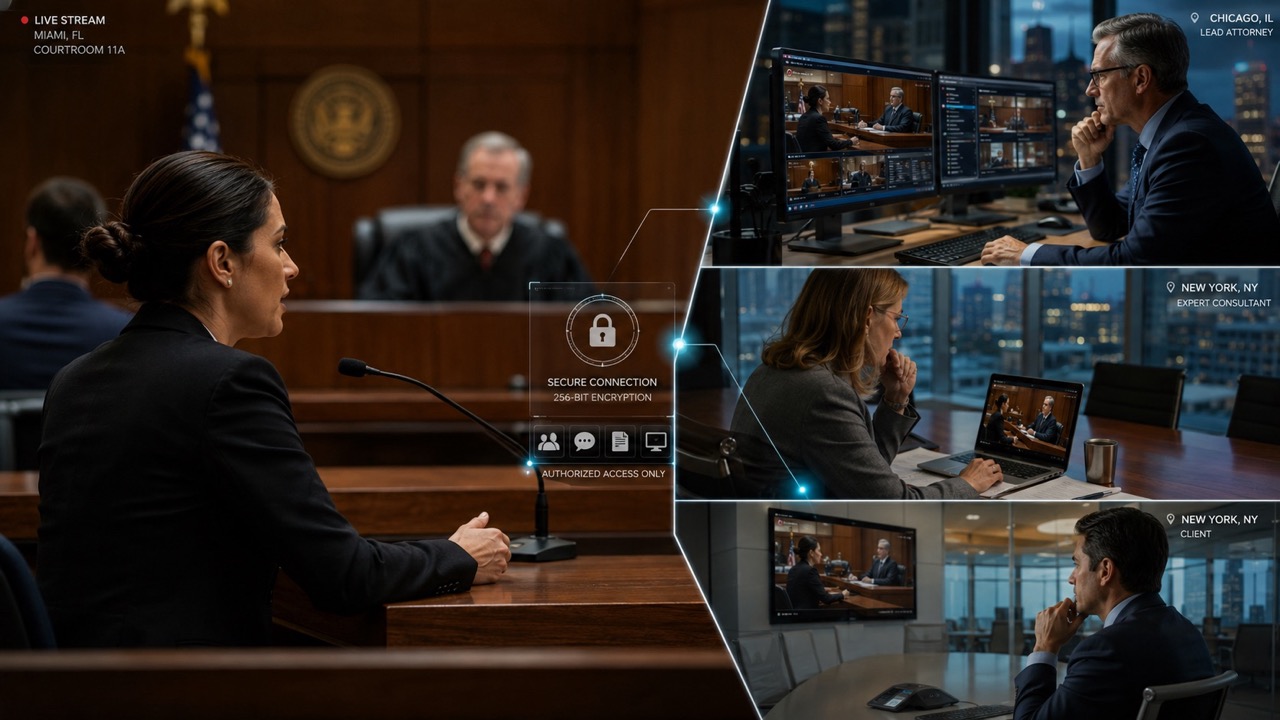
A witness testifies in a courtroom in Miami. The lead attorney’s expert consultant watches from an office in Chicago. The client follows the proceedings from a conference room in New York. This is not a future scenario. It is how high-stakes litigation works in 2026.
Trial live-streaming has become a serious operational tool for legal teams managing complex, multi-party cases. It connects people who cannot be in the room to everything happening inside it. And when the stakes are high, that connection directly affects how well a legal team performs.
This blog breaks down exactly how legal teams use live-streaming during trials, what it takes to do it right, and why it has become a standard part of modern litigation support.
What Trial Live-Streaming Actually Does
Live-streaming transmits court proceedings in real time to authorized viewers outside the courtroom. Attorneys, clients, consultants, and co-counsel watch testimony as it happens from any location.
This is different from receiving a transcript or video recording after the fact. Live-streaming gives remote participants access to the proceeding at the exact moment it unfolds. They see witness testimony, hear examination and cross-examination, and observe courtroom dynamics in real time. For legal teams managing complex cases, this kind of immediate access changes how decisions get made during trial.
Who Uses Live-Streaming During Trials
Several people on a legal team benefit directly from trial live-streaming.
- Expert witnesses and consultants cannot always be present in the courtroom. Live access lets them monitor testimony relevant to their area and relay observations to the trial team immediately.
- Remote co-counsel working on different aspects of the case stay fully informed without traveling to each session. They can contribute analysis, flag issues, and support the lead attorney without being physically present.
- Clients who want to follow their case closely can watch proceedings from their own location. This reduces the need for lengthy debriefs and keeps clients informed as the trial develops.
- Senior partners and supervisors who are not actively trying the case can monitor proceedings without disrupting the courtroom. They provide guidance and strategic input based on what they watch live.
Each of these participants gains real value from watching proceedings as they happen rather than waiting for a summary afterward.
The Strategic Advantage Legal Teams Gain
Live-streaming offers more than convenience during a trial. It allows legal teams to stay connected and make informed decisions in real time. Consultants, experts, and co-counsel who are not physically present can follow the proceedings and provide immediate feedback when needed.
Remote team members may spot inconsistencies, identify important testimony, or suggest follow-up questions that help strengthen the case. Live-streaming also keeps clients informed throughout the trial without requiring them to attend in person. When clients have a clearer understanding of what is happening, they can make faster and more confident decisions about strategy and potential settlement discussions.
Over the course of a lengthy trial, these benefits can improve communication, coordination, and overall case management, helping legal teams stay focused and responsive as new developments arise.
How Live-Streaming Works in Practice
Setting up trial live-streaming requires more than pointing a camera at the courtroom. Professional execution matters significantly. A qualified legal videographer positions equipment to capture the proceedings clearly. Audio must be clean and consistent. The feed must be stable and secure. Transmission delays must be minimal so remote viewers follow the proceeding in real time.
Access is controlled through secure, password-protected platforms. Only authorized participants receive the link and credentials. This protects the confidentiality of the proceedings and prevents unauthorized access to sensitive testimony. CourtScribes provides professional live-streaming as part of its full litigation support services. The setup is handled by experienced professionals who understand courtroom environments and the technical requirements of live legal proceedings.
Live-Streaming Combined With Legal Videography
Trial live-streaming and legal videography work together to create a complete record of proceedings. While the live feed serves remote participants in real time, the professional video recording creates a permanent, high-quality record of everything that happened. Legal teams use that recording for post-trial review, appeal preparation, and future reference.
When the video is also synchronized with the official transcript, the value increases further. Video-to-text synchronization allows attorneys to click a transcript line and jump directly to the matching moment in the footage. Finding a specific piece of testimony takes seconds instead of minutes. This combination of live access during trial and a synchronized record afterward gives legal teams tools at both ends of the proceeding.
Situations Where Live-Streaming Makes the Biggest Difference
Some cases benefit from trial live-streaming more than others.
- Complex commercial litigation involving financial disputes, corporate governance, or regulatory matters often requires input from experts who cannot travel to every session. Live-streaming keeps those experts connected without requiring their physical presence.
- Multi-district litigation and class actions involve large teams spread across multiple locations. Coordinating that many people in a single courtroom is not practical. Live-streaming lets the team stay unified without converging on one location.
- High-profile cases with active client involvement benefit from live access because clients who follow proceedings closely make faster decisions. They do not need to wait for end-of-day briefings to understand what happened.
- Cases with out-of-state or international parties use live-streaming to maintain participation across time zones and jurisdictions without the cost of constant travel.
What Courts Require Before You Stream
Not every courtroom permits live-streaming without specific authorization. Court rules vary by jurisdiction and judge. Before setting up trial live-streaming, legal teams must confirm that the court permits it. Some jurisdictions require advance notice or a formal motion. Others have standing rules about cameras and recording devices in the courtroom.
Working with an experienced court reporting and legal videography service helps legal teams navigate these requirements correctly. CourtScribes professionals understand the procedural landscape and help ensure the setup complies with applicable rules before the first session begins. Getting this right at the start prevents disruptions that could affect the proceedings themselves.
Security and Confidentiality in Live-Streaming
High-stakes trials involve sensitive testimony, privileged communications, and confidential evidence. Security is not optional when live-streaming these proceedings. A professional trial live-streaming setup uses encrypted transmission, secure access credentials, and strict viewer controls. Only people with explicit authorization can access the feed. No recording or distribution happens outside the controlled platform.
This level of security protection is essential in cases involving trade secrets, financial data, personal injury claims, or any matter where confidentiality is critical to the client’s interests. CourtScribes handles this through secure, professional-grade systems designed specifically for legal proceedings. The technology protects the feed from end to end.
After the Trial: How the Recording Supports What Comes Next
The value of trial live-streaming does not end when the session closes. The professional video recording captured during the proceeding becomes a resource for appeal preparation, post-trial motions, and case review. Legal teams go back to specific moments in testimony. They identify what a witness said under cross-examination. They review how the judge ruled on key objections.
When that footage is synchronized with the certified transcript, the review process becomes significantly faster. Attorneys search the transcript by keyword and go directly to the video moment. This saves hours during post-trial work and strengthens the foundation for any appeal. CourtScribes stores all transcripts, exhibits, and video recordings in a secure private repository organized by case. Legal teams access every file from any device at any hour without waiting for someone to send them a link.
Keep Your Entire Legal Team Connected During Trial
High-stakes trials demand coordinated teams. Trial live-streaming keeps every member of that team connected to what matters most, regardless of where they are working.
CourtScribes delivers professional trial live-streaming, legal videography, AI-powered court reporting, video-to-text synchronization, and secure 24/7 access to all case files. National coverage means your team gets consistent, reliable support in every jurisdiction.
Your next high-stakes trial deserves full professional support from start to finish. Contact CourtScribes today to schedule your services.
 Toll-Free: 833-SCRIBES
 scheduling@courtscribes.com
billing@courtscribes.com