
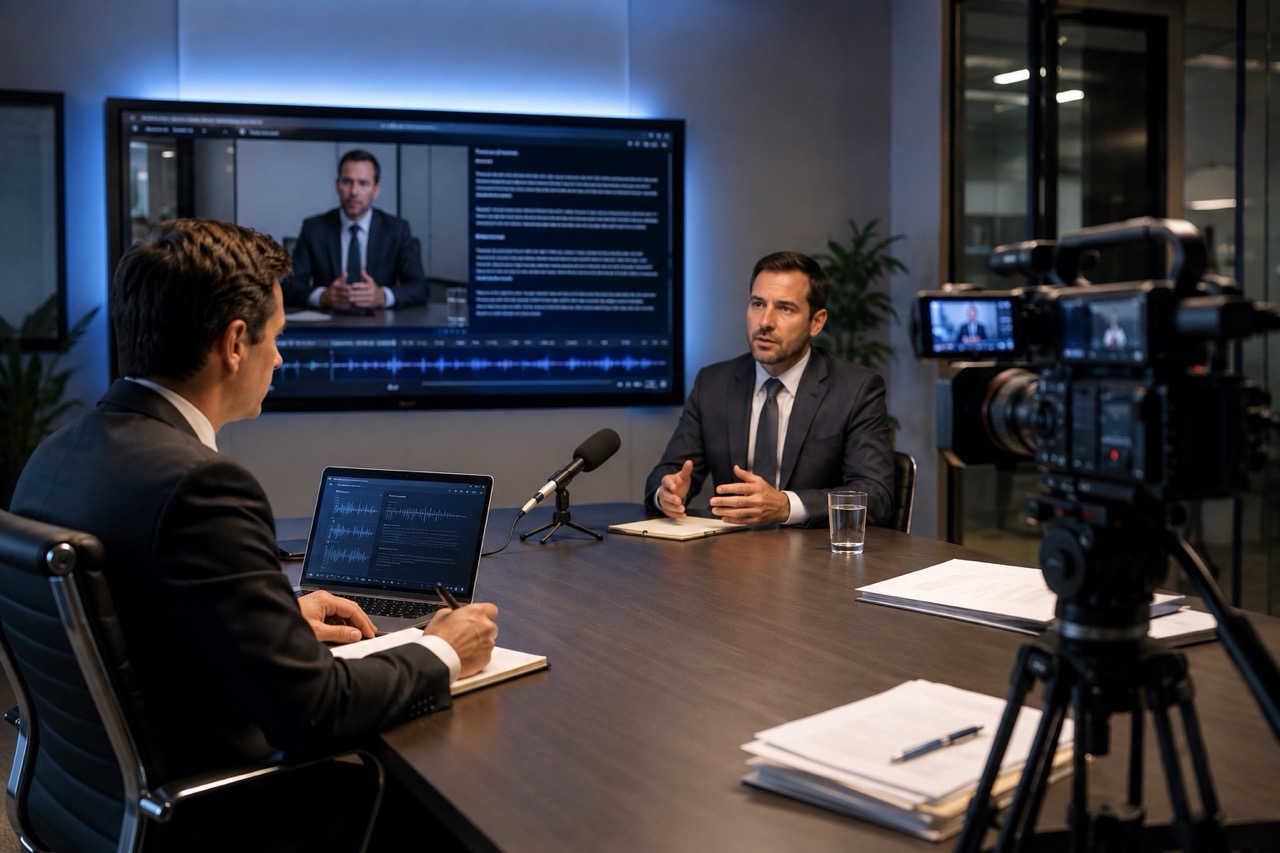
How Accurate Is Speech-to-Text Technology in 2026?
Speech-to-text technology spreads rapidly across legal, business, and remote communication industries worldwide. AI-powered transcription tools have improved dramatically in recent years through machine learning advances. Accuracy matters tremendously in legal proceedings, depositions, and court reporting where errors cost cases.
Modern technology promises faster documentation with reduced costs compared to traditional stenography methods. However, legal professionals question whether automated systems deliver reliability that courts demand. Moreover, the stakes remain too high for experimentation with unproven technology solutions.
How reliable is modern speech-to-text technology in 2026 for critical legal documentation? This blog examines speech-to-text accuracy, limitations, and appropriate applications for legal professionals.
What Is Speech-to-Text Technology?
Speech-to-text systems convert spoken words into written transcripts through advanced algorithms automatically. AI, machine learning, and voice recognition advancements enable computers to process audio faster. These systems analyze sound patterns and match them to known words stored extensively.
Common uses include legal proceedings, remote depositions, business meetings, and court reporting services. Technology assists professionals by generating preliminary transcripts that require verification before finalization. Additionally, speech-to-text supports accessibility by providing real-time captions during live events.
Modern systems handle multiple languages, accents, and speaking speeds more effectively than earlier versions. However, performance varies significantly based on audio quality and environmental conditions completely.
How Accurate Is Speech-to-Text Technology in 2026?
Major improvements in AI-driven transcription accuracy make 2026 systems substantially better than previous versions. Modern speech-to-text platforms achieve 85% to 95% accuracy in optimal conditions with clear audio. These systems perform better with structured environments featuring minimal background noise and single speakers.
Speech-to-text accuracy can still vary dramatically depending on multiple environmental and technical factors. Legal settings demand higher standards than general business transcription because errors affect case outcomes. Moreover, courtroom admissibility requires certified accuracy that automated systems alone cannot provide currently.
Professional verification remains essential for legal transcription despite impressive technological advances recently. Human oversight catches contextual errors that algorithms miss during complex legal terminology processing.
Key Factors That Affect Speech-to-Text Accuracy
Multiple variables determine whether speech-to-text systems deliver acceptable documentation quality for legal proceedings. Understanding these factors helps attorneys evaluate appropriate technology applications realistically.
Here are the critical elements that influence speech-to-text accuracy:
Audio Quality and Background Noise
Clean audio input proves absolutely essential for acceptable speech-to-text accuracy in legal settings. Background noise from HVAC systems, traffic, or conversations ruins automated transcription completely. Overlapping speakers and interruptions confuse algorithms that cannot distinguish between simultaneous voices effectively. Professional microphones and acoustic treatment dramatically improve input quality that systems require. Poor audio quality represents the most common reason speech-to-text fails legal standards.
Multiple Speakers and Legal Terminology
Technical legal language including Latin phrases and specialized terminology challenges automated transcription systems. AI models trained on general language struggle with courtroom vocabulary and procedural terminology. Speaker identification issues during depositions create attribution errors that compromise transcript reliability completely. Multiple attorneys speaking rapidly during contentious proceedings overwhelm systems designed for structured communication.
Internet Stability During Remote Proceedings
Connection issues affect live transcription quality by creating audio dropouts and processing delays. Risks during Zoom-based depositions and hearings multiply when bandwidth fluctuates unexpectedly. Unstable internet corrupts audio input that speech-to-text systems require for accurate processing. Remote proceedings demand reliable connectivity that many locations cannot provide consistently.
Human Oversight and Transcript Review
AI still benefits tremendously from professional review by certified court reporters afterward. Verifying verbatim legal records requires expertise that automated systems lack fundamentally. Human reviewers catch errors, clarify unclear passages, and ensure proper legal formatting throughout. Professional oversight transforms preliminary AI output into court-admissible certified transcripts reliably.
The Critical Importance of Precision in Legal Documentation
Exact testimony documentation protects case strategies and preserves accurate records for appeals. Transcription errors in litigation create dangerous misunderstandings about what witnesses actually stated. Impact on appeals, evidence review, and trial preparation proves substantial when documentation fails.
Complex cases demand dependable transcript records that attorneys can trust without verification concerns. A single word error can change testimony meaning completely in critical legal contexts. Moreover, judges reject transcripts lacking proper certification regardless of underlying accuracy levels.
Speech-to-text accuracy must meet higher standards in legal settings than casual business applications. Professional court reporting maintains reliability that automated systems alone cannot achieve currently.
Common Benefits of Modern Speech-to-Text Technology
Advanced speech-to-text systems deliver significant advantages when properly implemented with professional oversight. Technology accelerates workflows while reducing costs compared to traditional documentation methods alone.
Key benefits include:
- Faster transcript turnaround times enabling quicker case progression and strategic decision-making
- Improved accessibility during remote proceedings through real-time caption generation for participants
- Real-time transcription capabilities allowing attorneys to review testimony as proceedings continue
- Easier document search and review through keyword searching across thousands of transcript pages
- Better collaboration across legal teams through instant document sharing and synchronized access
- Integration with legal videography and repositories creating comprehensive documentation systems efficiently
Can Speech-to-Text Replace Human Court Reporters?
AI improves efficiency dramatically but human expertise remains critical for legal documentation reliability. Professional court reporters provide oversight, clarification, and transcript verification that technology cannot replicate. The role of professional court reporting teams includes maintaining accuracy standards that courts enforce.
Hybrid approaches combining technology with experienced professionals deliver optimal results consistently. Speech-to-text generates preliminary drafts while certified reporters verify accuracy before certification. This combination provides speed advantages without sacrificing reliability that legal proceedings demand absolutely.
Technology serves court reporters rather than replacing them in professional legal documentation. Human judgment remains essential for handling unclear testimony, speaker identification, and contextual interpretation.
How Speech-to-Text Supports Remote Depositions in 2026
Growing use of remote proceedings and Zoom depositions creates opportunities for speech-to-text applications. Real-time access to transcripts during virtual sessions helps attorneys follow testimony more effectively. Multiple participants benefit from caption access that clarifies testimony in real-time.
Multi-location legal teams coordinate more efficiently when preliminary transcripts arrive quickly after proceedings. Speech-to-text accuracy supports remote collaboration by accelerating documentation workflows significantly. However, secure and organized transcript management systems remain essential for protecting confidential materials.
Technology enables remote deposition efficiency while professional verification maintains legal documentation standards. The combination supports modern legal practice without compromising case documentation integrity.
What Attorneys Should Look for in a Speech-to-Text Solution
Professional speech-to-text providers deliver more than automated transcription through comprehensive service integration. Smart attorneys evaluate complete documentation systems rather than isolated technology features alone.
Essential capabilities include:
- AI-powered transcription support that accelerates preliminary draft generation efficiently
- Professional transcript review by certified court reporters ensuring accuracy and certification
- Secure cloud-based storage protecting confidential case materials through encryption protocols
- Video-to-text synchronization linking testimony moments to exact transcript locations instantly
- Real-time remote proceeding support enabling live caption access during virtual depositions
- Fast and reliable transcript delivery meeting litigation deadlines without quality compromise
How CourtScribes Uses Modern Speech-to-Text Technology
CourtScribes delivers AI-powered court reporting services that combine technology with professional expertise. Our speech-to-text technology integration accelerates preliminary transcription while certified reporters verify accuracy. Remote court appearances via Zoom benefit from real-time caption access during proceedings.
Professional legal videography and synchronization create comprehensive documentation that strengthens case preparation. Secure online transcript repositories protect confidential materials through bank-level encryption and access controls. Additionally, nationwide litigation support coverage ensures consistent quality regardless of case location.
Speech-to-text accuracy improves continuously through AI advances, but legal proceedings still require professional certification. CourtScribes balances innovation with reliability that courts demand for admissible documentation.
Choose Verified Accuracy for Legal Documentation
Speech-to-text technology proves more advanced and reliable than ever before in 2026. Modern systems deliver impressive preliminary accuracy that accelerates documentation workflows significantly. However, legal proceedings still require professional oversight and precision that automated systems alone cannot provide.
Choose trusted litigation support providers for accurate documentation that courts accept confidently. Contact CourtScribes today for professional court reporting that combines technology with certified expertise.
📞 Toll-Free: 833-SCRIBES
📧 scheduling@courtscribes.com
📧 billing@courtscribes.com