
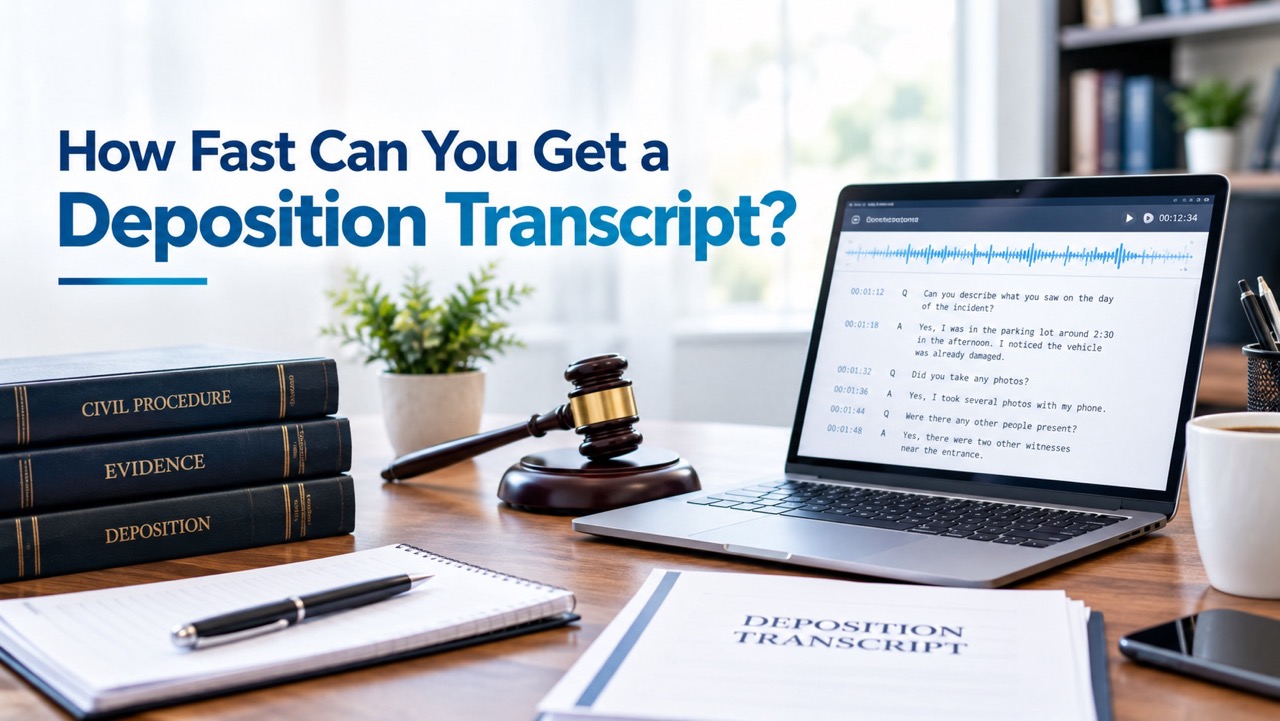
How Fast Can You Get a Deposition Transcript?
A key witness just finished testifying. Your motion deadline is ten days away. Now you need the transcript, and you need it fast. Many attorneys learn that delivery speed depends on choices made before the deposition starts. Deposition transcript turnaround can range from seconds of realtime text to two weeks or more. The difference comes down to the tools you request and the service tier you order. This guide breaks down standard delivery times, rush options, and the technology that shortens the wait. You will also learn what slows transcripts down and how to plan around your deadlines.
Standard Delivery: What Most Firms Expect
No federal rule sets a single deadline for producing a deposition transcript. Court reporting agencies set their own schedules. Many quote about 10 business days for a standard certified transcript. Some quote 10 to 15 business days, especially in busy markets. Faster tiers cost more. Expedited delivery can shrink the wait to five days, three days, or overnight. Daily copy delivers a finished transcript by the next day. Your standard deposition transcript turnaround also depends on page count and reporter workload. Ask about every tier when you schedule a court reporter. Choosing early gives the agency time to staff the job with the right reporter.
Tools That Put Testimony in Your Hands Sooner
Speed does not come only from paying rush fees. The right tools can put testimony on your screen before the witness leaves the room. Some tools give you unofficial text for strategy. Others shorten production of the certified record. Smart firms mix both based on the case. Each option below affects deposition transcript turnaround in a different way. Here are the tools worth requesting when you book your next deposition.
Realtime Transcription Feeds
Realtime reporting streams testimony to your laptop or tablet as the witness speaks. A stenographer’s machine sends text through translation software within seconds. You can search earlier answers, mark key lines, and adjust your questions on the spot. Remote participants can follow the same feed. Realtime text is not a certified transcript. It may contain untranslated strokes and spelling gaps. Use it to guide the examination, not to quote in a filing. Realtime requires a qualified reporter and advance notice. Request it when you book, since not every reporter offers this service.
Rough Draft Transcripts
A rough draft is an unedited version of the testimony. Agencies can often deliver one the same day as the deposition. It helps you prepare for the next witness, brief a client, or update case strategy. A rough draft is not certified. Do not cite it in motions or use it as an official record. Page and line numbers may also shift in the final version. Most agencies charge a per-page fee for rough drafts. Order one before the deposition begins so the reporter can plan for it. That small step can save days of waiting.
Expedited and Daily Copy Delivery
When you need a certified record quickly, order expedited delivery. This produces a final transcript you can use in motions and at trial. Common expedited tiers range from 24 hours to five business days. Daily copy works well for multi-day depositions. You receive each day’s transcript before the next session starts. Expect higher per-page rates as the window shrinks. Reporters typically deliver to all ordering parties at the same time. A party who pays for a rush order may receive it sooner. Tell the agency your deadline when you schedule, not after the deposition ends.
Digital Reporting With Speech-to-Text
Digital court reporting records testimony with professional audio equipment. Speech-to-text software then creates a draft for human editors to review. Editors start from text instead of raw audio, which can shorten production. The audio file also lets editors verify difficult passages instead of guessing. CourtScribes builds its court reporting services around speech-to-text technology and AI-powered court reporting. Some agencies now offer AI-generated drafts within about 24 hours. Like any rough draft, these suit internal review only. The certified transcript remains the version for court. Ask any provider how it checks accuracy before certification.
Remote Depositions and Electronic Delivery
Remote depositions remove travel from the schedule. Witnesses, counsel, and the reporter can connect from separate locations. CourtScribes handles remote depositions for parties in different cities and states. Electronic delivery saves even more time. Paper copies need printing and shipping, while a PDF arrives in minutes. You can order transcripts with email delivery and exhibits in PDF, TIFF, or JPG format. The Private Online Repository stores transcripts, exhibits, and videos by case. You can open them from a phone, tablet, or PC. That access helps during hearings and late-night drafting sessions.
What Slows Deposition Transcript Turnaround
Even a simple deposition can face delays. Most slowdowns trace back to details the agency learned too late. A transcript is more than typed words. Reporters verify names, mark exhibits, format pages, and certify the final record. Each extra step adds time. Knowing the common bottlenecks helps you plan around them. Watch for these factors before your next deposition:
- Length. A full-day deposition can run 200 pages or more.
- Technical terms. Medical, engineering, and financial language needs careful spelling checks.
- Crosstalk. Overlapping speakers force reporters to review notes or audio more closely.
- Heavy exhibits. Scanning, labeling, and linking exhibits adds production steps.
- Interpreters. Translated testimony takes longer to transcribe and proofread.
- Late orders. A rush request after the deposition gives the agency less time to plan.
- Reporter shortage. Fewer available reporters can stretch standard windows in some regions.
The Clock Keeps Running After Delivery
Delivery is not always the final step. Under Federal Rule of Civil Procedure 30(e), the deponent or a party may request review. That request must come before the deposition ends. The witness then gets 30 days after notice that the transcript is available. During that window, the witness can review it and sign a statement listing changes and reasons. The reporter notes in the certificate whether anyone requested review. State court rules can differ, so check the rules for your court. Build this window into your case calendar. A faster transcript also starts the 30-day review period sooner. That matters when a summary judgment deadline is close.
How to Get Your Transcript Faster
Fast delivery starts with a clear order. Most delays disappear when the agency knows your needs before the first question. Share your deadlines, case details, and format preferences when you book. A five-minute call can save days of waiting later. Good preparation also helps the reporter produce a cleaner record. Use this checklist to shorten your deposition transcript turnaround on the next case:
- Book early. Give the agency time to assign a reporter who fits your needs.
- State your deadline. Request expedited delivery or daily copy at scheduling, not afterward.
- Request add-ons up front. Ask for realtime, rough drafts, or video when you book.
- Send a word list. Share names, places, and technical terms before the deposition.
- Organize exhibits. Pre-mark documents and send digital copies to the reporter.
- Control crosstalk. Ask participants to speak one at a time.
- Choose electronic delivery. PDF and email arrive faster than paper or discs.
Get Testimony on Your Timeline With CourtScribes
So, how fast can you get a deposition transcript? Realtime text appears within seconds. Rough drafts can arrive the same day. A certified transcript may take one day or about two weeks, depending on the tier you order. The tools you choose shape the wait more than anything else. CourtScribes combines speech-to-text technology, AI-powered court reporting, and remote deposition support. Your transcripts and exhibits stay available through secure, 24/7 online access. When deposition transcript turnaround matters, call 833-SCRIBES (727-4237) or schedule your deposition today. Share your deadline, and our team will help you pick the right delivery option.
 Toll-Free: 833-SCRIBES
 scheduling@courtscribes.com
billing@courtscribes.com