
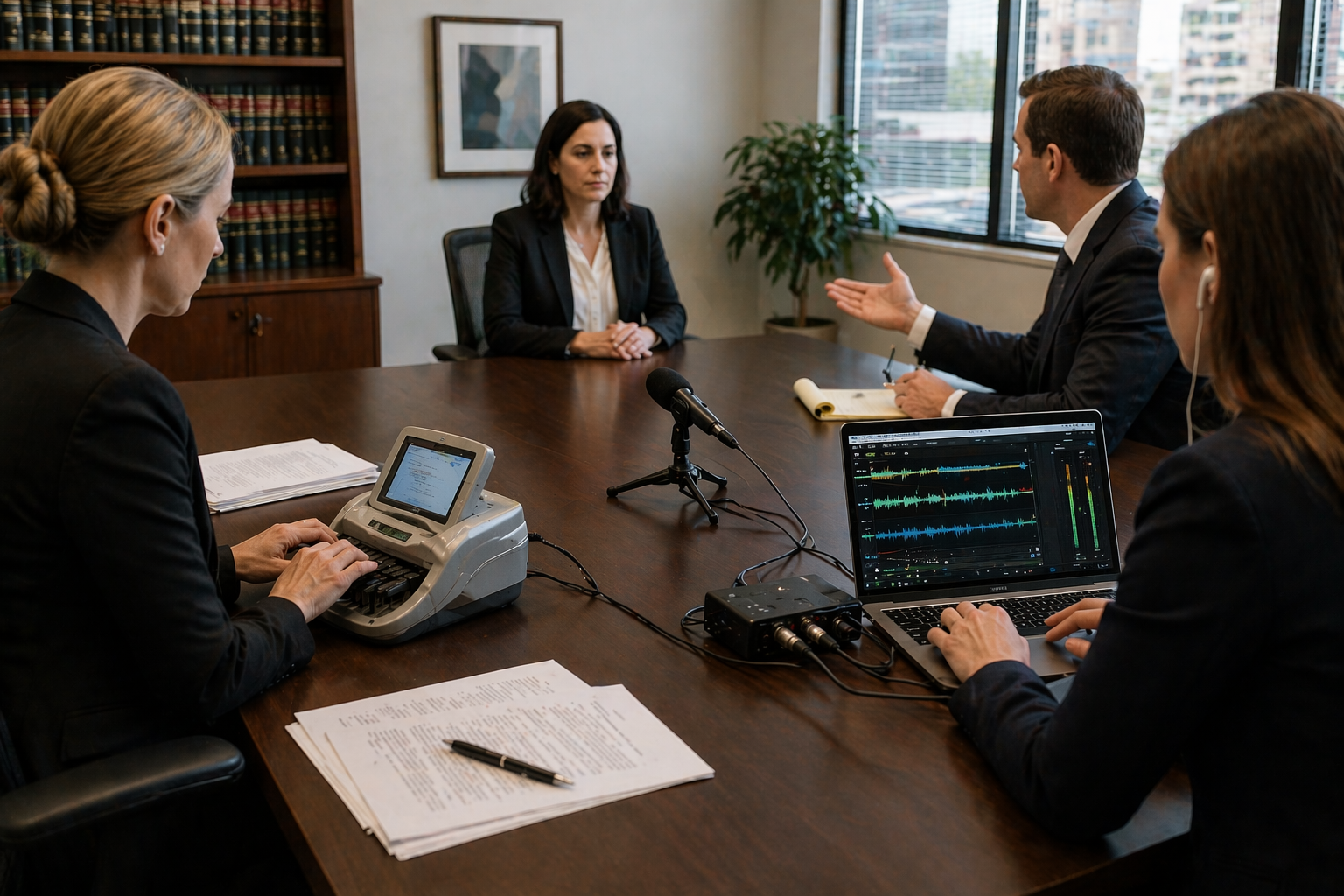
Choosing Between Court Stenographers and Digital Court Reporters for Depositions
You schedule a critical deposition and face an immediate decision about documentation methods. Traditional court stenographers promise proven reliability while digital court reporters offer modern efficiency. The choice affects transcript admissibility, case costs, and litigation timelines directly.
Legal professionals nationwide struggle with this decision as technology reshapes court reporting services. Some attorneys worry that digital methods compromise accuracy while others embrace innovation eagerly. Moreover, confusion persists about whether courts accept both formats equally under evidence rules.
Understanding the real differences protects your cases from documentation disasters. This guide clarifies what separates these approaches beyond surface-level technology distinctions completely.
What Is a Traditional Court Stenographer?
Traditional court stenographers use specialized stenotype machines that capture testimony through shorthand symbols. Professional training requires years of practice to achieve 225 words per minute accuracy. These certified professionals attend depositions physically and create real-time transcripts during proceedings.
Stenographers translate shorthand into readable English through computer-aided transcription software immediately. The profession demands exceptional focus, legal terminology knowledge, and procedural understanding throughout complex cases. Additionally, professional certification requires passing rigorous speed and accuracy tests under timed conditions.
Courts have trusted stenographic transcription for over a century through proven reliability. This established method remains the gold standard that judges recognize without hesitation.
What Is Digital Court Reporting?
Digital court reporters use high-quality audio and video equipment to record legal proceedings. They monitor recording quality while documenting witness appearances and exhibit identification throughout depositions. Professional digital reporters create comprehensive records through technology rather than stenographic shorthand methods.
The process involves capturing clear audio that AI-assisted software later transcribes into written text. Human verification reviews and corrects the AI output before certification and delivery. Furthermore, digital systems often include video synchronization that links testimony to exact transcript locations.
Technology advances make digital court reporting increasingly popular across legal markets nationwide. Modern platforms deliver professional documentation that meets court admissibility standards when properly implemented.
Key Technology Differences Between Methods
Stenographers operate specialized keyboards with fewer keys than standard computer keyboards require. Each keystroke combination represents complete words, phrases, or sounds that professionals memorize extensively. The stenotype machine connects directly to computers that translate shorthand into readable English.
Digital reporters use professional audio recorders, microphones, and video cameras during proceedings. Equipment quality determines transcription accuracy because AI software processes the recorded audio files. Additionally, backup recording systems prevent data loss when primary equipment fails unexpectedly. Both methods rely on technology but apply it differently during documentation processes.
Real-Time Transcript Availability Comparison
Traditional stenographers provide immediate real-time transcript feeds that attorneys view during depositions. This live access enables attorneys to search testimony, review statements, and adjust questioning strategies. Real-time capability represents a significant advantage for complex litigation requiring immediate tactical decisions.
Digital court reporting lacks true real-time transcript generation during active proceedings currently. Transcripts require post-proceeding processing through AI software and human verification before delivery. However, digital methods often deliver final certified transcripts faster than traditional stenography turnaround.
The trade-off involves immediate partial access versus delayed complete documentation availability. Attorneys must weigh real-time benefits against overall efficiency when choosing documentation methods.
Accuracy and Certification Standards
Professional certification requirements ensure both methods meet court admissibility standards when properly implemented:
| Certification Aspect | Court Stenographer | Digital Court Reporter |
|---|---|---|
| Professional License | Required in most states | Varies by jurisdiction |
| Certification Body | NCRA, state boards | AAERT, state requirements |
| Training Duration | 2-4 years intensive | Shorter formal training |
| Accuracy Standard | 95%+ on certification tests | Human verification required |
| Court Acceptance | Universal recognition | Growing acceptance |
| Real-Time Capability | Yes, during proceedings | No, post-processing only |
Both methods require human verification before final certification despite different technology approaches. Courts accept certified transcripts from either method when professionals meet jurisdictional requirements. Moreover, professional responsibility standards apply equally regardless of technology choices during documentation.
The critical factor remains human expertise that ensures accuracy rather than equipment type. Certification separates professional court reporting from inadequate automated alternatives completely.
Cost Differences Between Stenographers and Digital Reporters
Traditional stenographers typically charge higher per-page rates ranging from $5.00 to $7.50 nationwide. Appearance fees add $200 to $400 for stenographer presence during depositions and hearings. Additionally, real-time transcript feeds may include premium charges for immediate attorney access.
Digital court reporters often cost 20% to 30% less than traditional stenographic services. Lower overhead and efficient technology reduce operational expenses that savings pass to clients. Furthermore, faster turnaround times decrease overall litigation costs through improved case progression.
However, cost comparisons must include potential re-deposition expenses if courts reject inadequate documentation. Choosing the cheapest option creates risks that dwarf any initial savings completely.
Remote Deposition Capabilities
Digital court reporters excel at remote deposition support through native technology integration. Virtual proceedings require audio/video management skills that digital professionals develop specifically. Equipment familiarity enables smooth remote depositions without technical complications that disrupt testimony.
Traditional stenographers adapt to remote depositions but may require additional technology support. Some stenographers partner with videographers who handle recording while stenographers focus on transcription. Nevertheless, experienced stenographers successfully document virtual proceedings through platform expertise.
Both methods support remote depositions effectively when professionals receive proper training. Technology requirements favor digital reporters slightly but don’t eliminate stenographer capabilities entirely.
Speaker Identification Challenges
Accurate speaker identification requires professional judgment that both methods provide through different approaches:
Traditional Stenography Advantages:
- Direct visual observation during in-person depositions enables stenographers to identify speakers through physical presence. They watch who speaks and attribute statements accurately through real-time observation. This direct method eliminates confusion during rapid exchanges between multiple attorneys.
- Immediate clarification requests allow stenographers to interrupt proceedings when speaker identity becomes unclear. Professional protocol permits asking “who is speaking” to prevent attribution errors. Real-time intervention prevents mistakes that later correction cannot fix completely.
Digital Reporter Advantages:
- Video evidence backup provides visual confirmation of speaker identity during transcript review processes. Reporters review recorded video to verify speaker attribution before certification. Multiple playback opportunities improve accuracy beyond single-pass real-time documentation methods.
- Audio channel separation through multiple microphones isolates individual voices for clearer identification. Technology assigns speakers to specific audio channels that transcription software processes separately. This systematic approach reduces confusion during overlapping speech situations.
When Each Method Works Best
Traditional stenographers excel in complex multi-party litigation requiring real-time transcript access. High-stakes trials benefit from immediate documentation that supports rapid strategic adjustments. Moreover, jurisdictions with strict certification requirements favor traditional stenography through established acceptance.
Digital court reporters shine in remote depositions, routine proceedings, and cost-sensitive cases. Technology efficiency accelerates turnaround for straightforward testimony without complex speaker identification challenges. Additionally, video documentation provides credibility assessment tools that written transcripts alone cannot offer.
The optimal choice depends on specific case requirements rather than universal superiority claims. Experienced attorneys evaluate proceeding complexity before selecting appropriate documentation methods.
Hybrid Models Combining Both Approaches
CourtScribes pioneered hybrid court reporting that leverages both traditional expertise and modern technology. Our certified stenographers use AI-assisted tools that accelerate transcription without sacrificing accuracy. This combined approach delivers real-time capability with enhanced efficiency and reduced costs.
Hybrid systems capture the best aspects of both methods while minimizing individual weaknesses. Professional verification ensures court admissibility while technology improves speed and searchability. Furthermore, integrated video-to-text synchronization provides comprehensive documentation that supports effective trial preparation.
The future of court reporting involves thoughtful technology integration rather than complete methodology replacement. Smart firms adopt hybrid solutions that balance innovation with proven professional standards.
How CourtScribes Delivers Both Options
CourtScribes maintains certified stenographers and digital reporters who serve diverse client needs. Our flexible approach lets attorneys choose appropriate methods for specific proceedings. Traditional stenography remains available for complex litigation while digital options serve routine depositions.
Nationwide coverage ensures consistent quality regardless of documentation method or case location. Secure online repositories protect transcripts through encrypted storage and controlled access. Additionally, video-to-text synchronization enhances both stenographic and digital transcripts equally.
Professional expertise guides attorneys toward optimal documentation choices for their cases. We understand that one size never fits all in legal documentation requirements.
Making the Right Choice for Your Case
Consider proceeding complexity when evaluating stenographer versus digital reporter options. Multi-party litigation with numerous attorneys benefits from real-time stenographic documentation. Remote depositions with single witnesses work well with digital recording methods.
Budget constraints influence decisions but should never compromise transcript admissibility standards. Evaluate total costs including potential re-deposition expenses from inadequate documentation. Moreover, confirm that chosen providers maintain proper certification regardless of technology methods.
Consult experienced court reporting providers who offer honest guidance about appropriate choices. Professional recommendations protect your cases better than lowest-price selection criteria.
Secure Professional Documentation Today
Both court stenographers and digital reporters serve important roles in modern legal practice. The difference lies in technology application rather than professional commitment to accuracy. Understanding these distinctions empowers attorneys to make informed documentation decisions confidently.
CourtScribes provides expert guidance that matches documentation methods to your specific needs. Our certified professionals deliver court-admissible transcripts through traditional stenography, digital recording, or hybrid approaches. Choose experience and flexibility over one-size-fits-all limitations.
Contact CourtScribes today for professional court reporting that protects your cases regardless of method.
📞 Toll-Free: 833-SCRIBES
📧 scheduling@courtscribes.com
📧 billing@courtscribes.com