
Why a Certified Remote Court Reporter Protects Your Case
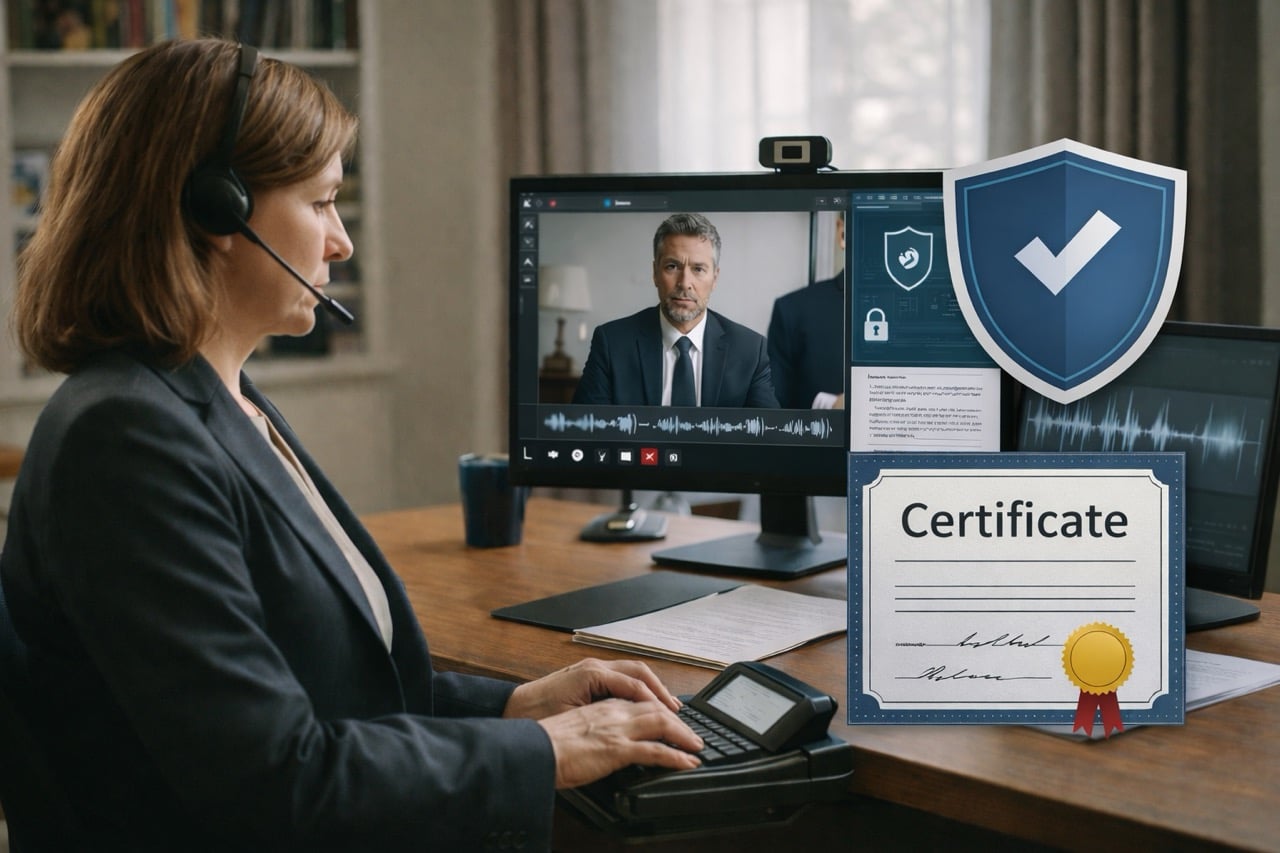
Remote proceedings now require certified professionals who maintain traditional accuracy standards in virtual environments. Virtual depositions have become standard practice across legal industries nationwide. However, uncertified or AI-only reporting risks accuracy, admissibility, and confidentiality in serious ways.
Courts expect identical documentation quality from remote proceedings as traditional in-person depositions. Certified professionals bring training and expertise that automated systems cannot replicate reliably. Additionally, proper certification ensures compliance with courtroom requirements across all jurisdictions.
A certified remote court reporter provides professional documentation that courts accept without authentication challenges. CourtScribes serves as a trusted nationwide provider with experienced certified professionals. Moreover, our comprehensive services protect case integrity through human expertise combined with advanced technology. Professional certification separates reliable court reporting from inadequate automated alternatives completely.
Why Certification Matters in Remote Court Reporting
Courts require verified accuracy and neutrality that only certified professionals can provide consistently. Professional certification demonstrates competence through rigorous testing and ongoing education requirements. Uncertified providers lack accountability that protects attorneys from documentation errors and admissibility challenges.
Certified reporters follow professional responsibility standards that govern legal documentation practices. They maintain neutrality while capturing complete testimony without bias or interpretation. Additionally, professional training ensures reporters understand legal procedures and terminology thoroughly.
Courts trust certified transcripts because professionals stake their licenses on accuracy and ethical compliance. A certified remote court reporter creates official records that meet evidentiary requirements nationwide. Furthermore, certification protects transcript admissibility by ensuring compliance with federal and state court rules. Professional credentials separate qualified reporters from general transcription services lacking legal expertise.
Accuracy You Can Trust in Virtual Proceedings
Remote environments increase risk of missed words, speaker overlap, and audio loss significantly. Background noise, connection instability, and technical problems complicate accurate transcription during virtual proceedings. Poor audio quality makes testimony unclear without professional intervention and equipment.
Certified reporters maintain accuracy remotely through specialized training and professional experience. They identify speaker changes even when multiple participants talk simultaneously during depositions. Additionally, experienced professionals request clarification when testimony becomes unclear or inaudible.
AI alone cannot handle complex legal terminology or make judgment calls about unclear statements. A certified remote court reporter combines technological assistance with human verification for optimal accuracy. Furthermore, professional oversight catches contextual errors that automated systems miss completely. Trust in transcript accuracy requires certified expertise that protects case outcomes and appellate records.
Confidentiality and Data Security in Remote Court Reporting
Remote proceedings involve sensitive testimony and confidential data requiring maximum security protection. Virtual platforms create vulnerabilities that traditional in-person depositions never faced. Unauthorized access or data breaches can compromise attorney-client privilege and case strategies.
How Certified Reporters Protect Legal Information
Professional remote court reporters implement comprehensive security measures that protect confidential case materials:
- Encrypted transcript storage prevents unauthorized access during transmission and secure repository maintenance
- Secure online repositories provide controlled access through multi-factor authentication and permission management
- Controlled user access limits file viewing to authorized case participants through verification protocols
- Chain-of-custody documentation maintains evidence integrity for admissibility and appellate review requirements
- Court-compliant data retention follows jurisdictional requirements for record preservation and confidentiality
A certified remote court reporter understands legal confidentiality obligations that general transcriptionists may overlook.
Technology Expertise That Supports Remote Depositions
Certified reporters know how to manage technology without disrupting testimony or compromising documentation quality. Professional training includes video conferencing platforms, recording software, and troubleshooting procedures. Technology expertise enables seamless proceedings despite technical complications.
Video-to-text synchronization links specific testimony moments to exact transcript locations for efficient review. Backup recording systems prevent data loss when primary equipment fails during critical testimony. Additionally, certified professionals manage connectivity issues proactively before they compromise proceedings.
Exhibit handling during virtual sessions requires coordination between attorneys, witnesses, and documentation systems. A certified remote court reporter ensures proper exhibit identification and chain of custody documentation. Furthermore, technical proficiency maintains professional presentation standards throughout complex virtual proceedings.
Faster Turnaround Without Sacrificing Accuracy
Certified reporters deliver faster, cleaner transcripts through professional workflows and quality control processes. Experienced professionals create initial documentation more accurately than uncertified alternatives. Clean transcripts require less editing time before final certification and delivery.
AI-assisted workflows improve speed when combined with human review by certified professionals. Technology processes audio quickly while reporters verify accuracy and context throughout. Additionally, hybrid approaches deliver timely transcripts without compromising professional quality standards.
Timely transcripts support litigation deadlines for motions, discovery responses, and trial preparation activities. A certified remote court reporter understands deadline importance and prioritizes efficient delivery. Furthermore, professional reliability prevents delays that could compromise case strategies.
When Hiring a Certified Remote Court Reporter Is Essential
Professional certification becomes critical in proceedings requiring absolute accuracy and legal admissibility. Complex cases demand certified expertise that protects against documentation errors and appeals issues.
Here are situations where certified professionals prove essential:
- Remote depositions requiring court-admissible documentation from virtual proceedings
- Out-of-state witnesses providing testimony that may become critical during trial
- Expert testimony involving technical terminology and complex subject matter
- High-stakes litigation where transcript accuracy directly impacts case outcomes
- Appellate records needing certified documentation for court review processes
- Multilingual proceedings requiring professional interpretation and accurate documentation
Hiring a certified remote court reporter protects case integrity in these critical situations.
How a Certified Remote Court Reporter Reduces Legal Risk
Professional certification prevents transcript challenges that could undermine case strategies or damage attorney credibility. Courts reject uncertified transcripts that lack proper authentication and professional verification. Certified documentation eliminates admissibility disputes that delay proceedings unnecessarily.
Reducing appeals issues requires accurate trial records that appellate courts can review confidently. Transcript errors create grounds for appeals that professional certification prevents through quality standards. Additionally, certified reporters maintain courtroom credibility through consistent professional performance.
Ensuring procedural compliance protects attorneys from sanctions related to inadequate documentation practices. A certified remote court reporter understands jurisdictional requirements that vary across courts. Furthermore, professional responsibility standards ensure ethical handling of confidential information throughout proceedings.
Why Law Firms Nationwide Choose CourtScribes
CourtScribes employs certified reporters nationwide who maintain the highest professional standards consistently. Our hybrid AI and human accuracy approach delivers speed without compromising documentation quality. Secure online access protects confidential materials through bank-level encryption and access controls.
Legal videography integration captures witness credibility that transcripts alone cannot convey effectively. Remote deposition expertise ensures smooth virtual proceedings regardless of technical complexity. Additionally, comprehensive services support every aspect of modern legal documentation requirements.
A CourtScribes remote court reporter combines certification, technology proficiency, and legal industry expertise. Our nationwide coverage ensures consistent quality wherever your cases require professional documentation. Furthermore, responsive support helps attorneys navigate virtual proceeding challenges successfully.
Hire a Certified Remote Court Reporter with Confidence
Professional certification ensures accuracy that courts accept and attorneys trust completely. Security measures protect confidential case materials throughout documentation and storage processes. Compliance with legal standards prevents admissibility challenges that delay proceedings. Fast turnaround supports tight litigation timelines without sacrificing transcript quality.
Choose a certified remote court reporter who delivers reliability your cases demand. Contact CourtScribes today for professional remote deposition services.
📞 Toll-Free: 833-SCRIBES
📧 scheduling@courtscribes.com
📧 billing@courtscribes.com