
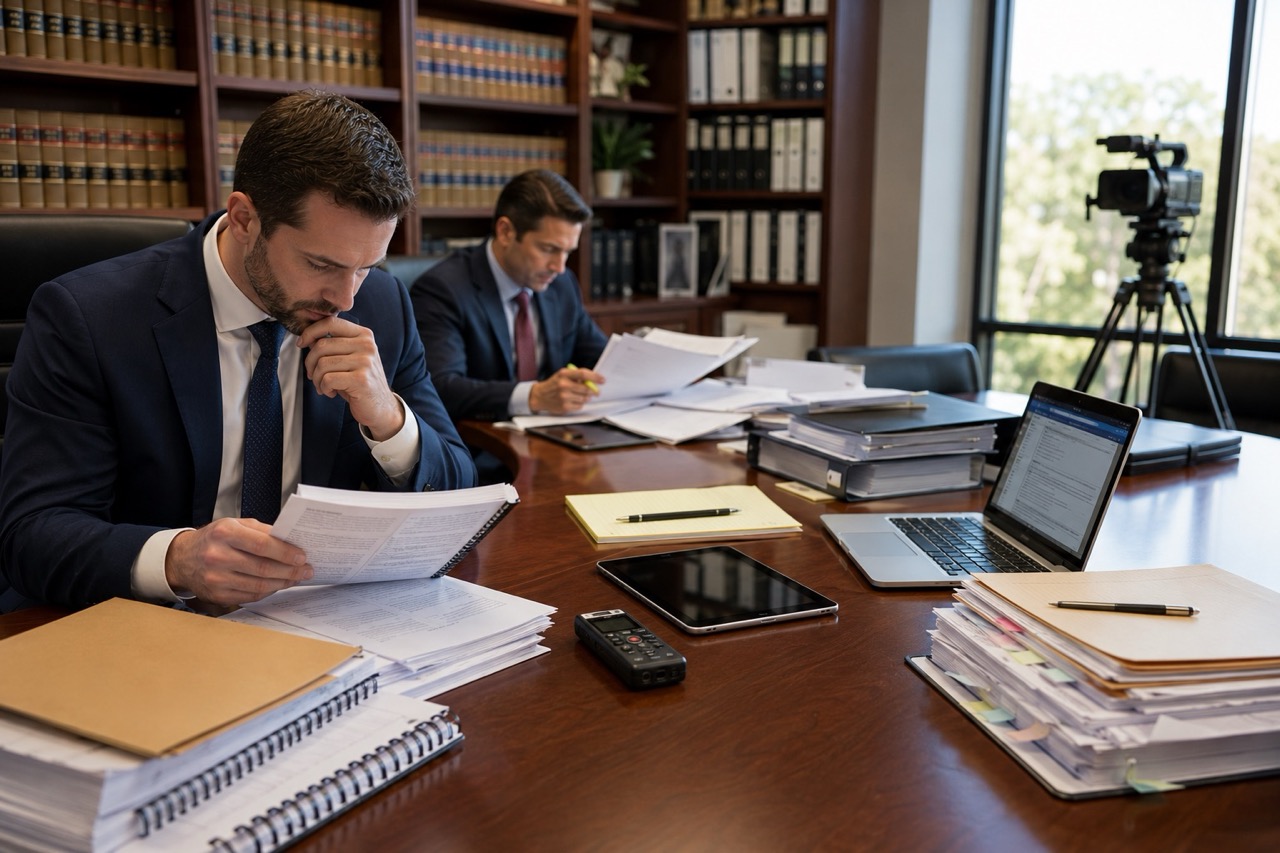
What Happens After a Deposition? A Step-by-Step Guide
The deposition ends. The witness leaves the room. But the work is far from over. What happens after a deposition directly shapes how a case moves forward. Attorneys who handle the post-deposition process efficiently gain a real advantage. Those who skip steps or wait too long often face delays, disputes, and missed opportunities. This step-by-step guide covers everything that happens after a deposition concludes. From transcript delivery to trial preparation, each stage matters and each one builds on the one before it.
Step 1: The Court Reporter Prepares the Official Transcript
The first thing that happens after a deposition is transcript production. The court reporter takes the recorded stenographic or AI-assisted capture and produces a certified verbatim transcript of the entire proceeding. This document becomes the official legal record of everything said during the session.
CourtScribes uses AI-powered court reporting to accelerate this process without sacrificing accuracy. Certified professionals review and certify every transcript before delivery. Legal teams receive their transcripts faster and with greater consistency than traditional methods alone provide. The turnaround time depends on the length of the session and whether expedited delivery was requested. Standard delivery typically takes a few business days. Expedited options are available when litigation timelines require faster access.
Step 2: The Transcript Is Delivered and Reviewed
Once the certified transcript arrives, the legal team’s review process begins. This is one of the most important steps after a deposition. A careful review catches errors before they become problems. It also gives attorneys the first structured look at exactly what the witness said under oath.
The review serves several purposes at once. It verifies accuracy. It identifies key statements. It flags anything that requires follow-up. Legal teams that skip this review often discover problems later when the transcript is used in a motion or at trial. CourtScribes provides 24/7 secure access to all transcripts through a private online repository. Attorneys access and begin reviewing the certified transcript the moment it is uploaded. No waiting for email delivery or office hours.
Step 3: The Witness Reviews and Signs the Transcript
In most jurisdictions, the deponent has the right to review the transcript after a deposition and make corrections through an errata sheet. This step is governed by procedural rules that vary by jurisdiction. Under Federal Rule of Civil Procedure 30(e), the deponent has 30 days after being notified that the transcript is available to review it and submit any changes. The witness does not rewrite testimony. They note corrections to errors in transcription and explain each change.
Attorneys on both sides monitor this process carefully. Significant changes to testimony on an errata sheet can be challenged at trial. Opposing counsel may use the original testimony alongside the correction to raise credibility issues with the witness. Understanding this step helps attorneys advise their clients correctly about what changes are appropriate and what the consequences of those changes may be.
Step 4: Attorneys Analyze the Testimony Strategically
After the transcript is reviewed and certified, the real strategic work begins. This is where the deposition’s value becomes clear. Attorneys go through the record looking for specific things that will shape how the case develops from this point forward. What attorneys look for matters significantly. The right analysis turns a deposition transcript into a powerful litigation tool. Here is what experienced attorneys focus on after a deposition:
- Inconsistencies with prior statements: Compare testimony to earlier written statements, interrogatory answers, or prior depositions. Contradictions become cross-examination material.
- Admissions that support your case: Identify any statement where the witness confirmed facts favorable to your client’s position.
- Gaps in testimony: Note what the witness did not address. Those gaps may require additional discovery or follow-up questions.
- Credibility indicators: Review how the witness answered difficult questions. Evasive answers, long pauses noted in the record, and corrections all affect credibility assessment.
- New leads for discovery: Testimony often reveals documents, witnesses, or facts that were not previously known. These become the basis for additional discovery requests.
Step 5: Video Recording Review and Synchronization
When the deposition was recorded on video, reviewing that footage after a deposition is a separate and equally important step. A transcript tells you what was said. The video shows you how it was said. Tone, hesitation, visible discomfort, and nonverbal communication all add context that words alone cannot capture.
Video-to-text synchronization makes this review significantly more efficient. Each line of the certified transcript links directly to the corresponding moment in the video. Attorneys click a transcript line and jump to that exact moment in the footage. Searching through hours of video manually becomes unnecessary.
This synchronized access changes how legal teams prepare for cross-examination and trial. They identify the moments where the witness struggled, contradicted themselves, or made admissions. They build their strategy around what is visible on screen, not just what appears on the page. CourtScribes provides video-to-text synchronization as part of its standard service. All video recordings are stored alongside the certified transcript in the secure online repository, organized by case.
Step 6: Determine Whether Additional Discovery Is Needed
Deposition testimony frequently opens new lines of inquiry. A witness references a document that has not been produced. They mention a conversation with someone who has not been deposed. They describe an event in a way that contradicts the timeline your team had established.
Each of these moments creates a decision point. Does the legal team need additional document requests? Should another witness be deposed? Does an expert need to review new information revealed in the testimony? After a deposition, attorneys assess the record carefully to determine what gaps remain and what additional steps are needed before the case is ready for trial or settlement discussions. Acting on these needs quickly keeps the litigation timeline on track.
Step 7: Update Case Strategy Based on What You Learned
Every deposition changes the case to some degree. The attorney’s job after a deposition is to incorporate what was learned into the broader litigation strategy. This step is where the deposition’s full value is realized. Testimony that supports your position gets built into your argument. Testimony that creates challenges gets addressed before it becomes a bigger problem at trial. Smart case strategy after a deposition covers several connected areas. Each one requires deliberate attention from the legal team.
Revise Your Witness List
A deposition may reveal that some witnesses have more valuable information than expected, while others may contribute very little to the case. After reviewing the testimony, update your witness list to reflect what you learned rather than relying on earlier assumptions. You may decide to add new witnesses, remove unnecessary ones, or adjust the order in which they will testify. Keeping your witness strategy aligned with the evidence helps strengthen your case and ensures your legal team focuses on the people who can provide the most relevant and credible testimony.
Reassess Settlement Position
Deposition testimony often gives both sides a clearer understanding of the strengths and weaknesses of the case. If the testimony strongly supports your position, you may have greater confidence during settlement negotiations. If it raises concerns or reveals unexpected challenges, it may be necessary to rethink your strategy before moving forward. Reviewing the deposition carefully helps you evaluate potential risks, estimate the value of the case more accurately, and decide whether continuing negotiations or preparing for trial is the better course of action.
Update Expert Witnesses
If your case includes expert witnesses, provide them with the relevant deposition transcript as soon as possible. Testimony may introduce new facts, clarify existing evidence, or raise issues that affect the expert’s opinions. Reviewing the updated information allows experts to refine their analysis, revise reports if necessary, and prepare more effectively for future testimony. Keeping expert witnesses informed ensures their opinions remain accurate, consistent, and supported by the latest evidence presented during the discovery process.
Adjust Trial Preparation
The information gathered during a deposition should be incorporated into your overall trial preparation. Review the testimony to identify statements that support your arguments, challenge opposing witnesses, or strengthen your evidence. Update your trial outline, witness examination plans, exhibit list, and other preparation materials to reflect what was learned. Making these adjustments early helps your legal team stay organized, avoid surprises, and develop a stronger strategy before the case moves to trial or additional proceedings.
Step 8: Store and Organize All Deposition Materials
Every document, exhibit, and video recording from the deposition needs to be stored securely and organized clearly. After a deposition, disorganized files create problems that compound as the case grows. Exhibits get separated from the transcripts that reference them. Video recordings sit in someone’s email rather than a shared, accessible location. Team members work from different versions of the same document.
CourtScribes’ secure online repository keeps everything in one place. Transcripts, exhibits, and video recordings are organized by case and accessible from any device at any hour. Every authorized team member works from the same files without confusion about which version is current. This organization pays off throughout the remainder of the litigation. When a specific exhibit or testimony section is needed during a motion hearing, it is retrieved in seconds rather than searched for across multiple storage locations.
Step 9: Meet Filing Deadlines and Procedural Requirements
Depositions connect to specific procedural deadlines that attorneys must track carefully. The errata sheet deadline is one. Discovery cutoff dates are another. Some jurisdictions require specific filings or notices related to deposition transcripts within set timeframes. Missing these deadlines creates procedural problems that slow the case down. Attorneys should calendar every relevant deadline immediately after a deposition concludes. Do not rely on memory or informal reminders for deadlines that carry procedural consequences.
The Post-Deposition Process Shapes Every Case That Follows
What happens after a deposition is not a formality. It is where cases are built, strategies are sharpened, and litigation advantages are either captured or lost. Every step in this guide, from transcript review to strategic reassessment to secure file management, contributes directly to how prepared your team is when the case reaches its critical moments.
CourtScribes supports every stage of this process. AI-powered court reporting, professional legal videography, video-to-text synchronization, and 24/7 secure access to all case files give legal teams everything they need after a deposition concludes.
Schedule your next deposition with CourtScribes and keep every step of the process moving forward.
 Toll-Free: 833-SCRIBES
 scheduling@courtscribes.com
billing@courtscribes.com