
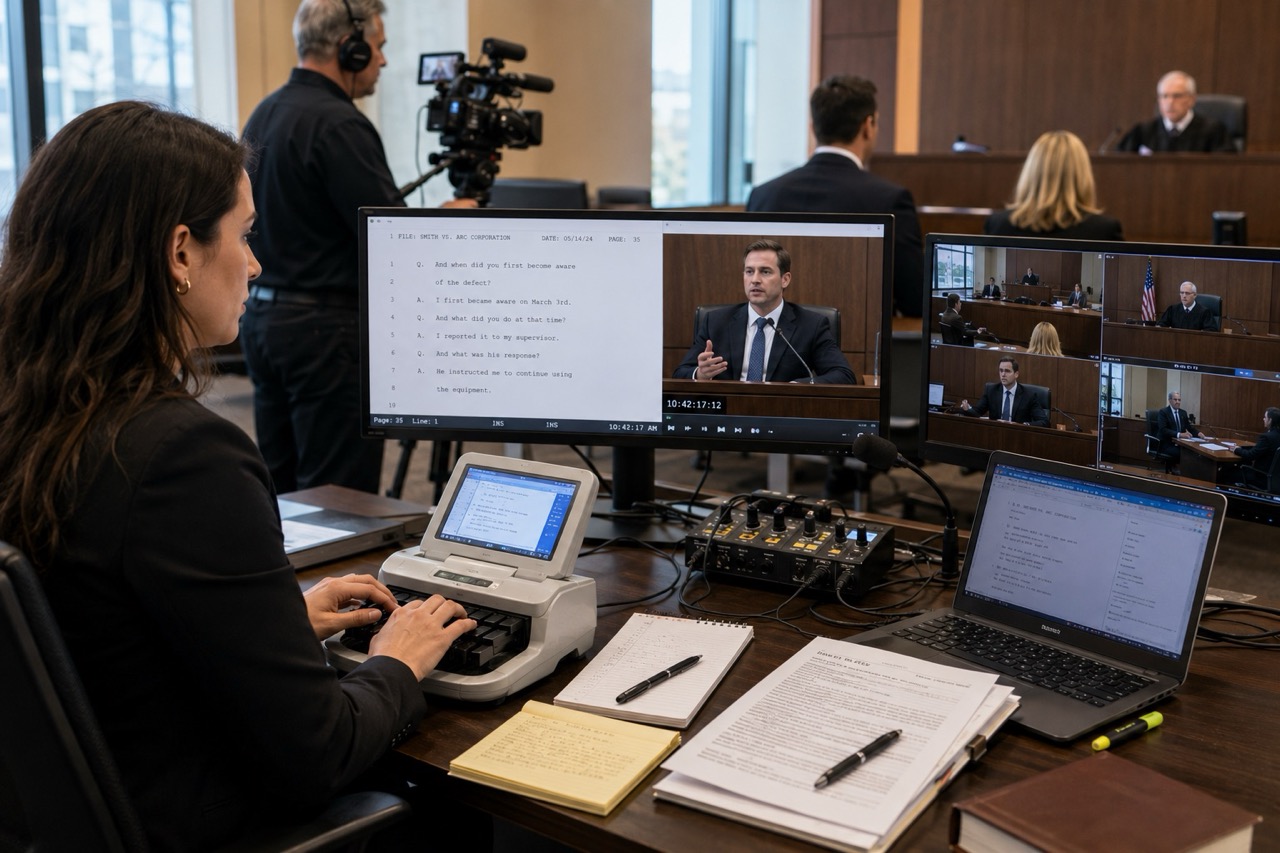
Legal Transcription Services: Accurate Documentation for the Legal Industry
The legal industry depends heavily on accuracy, precision, and proper documentation. Every statement made during court proceedings, depositions, arbitration sessions, or attorney consultations can carry significant legal importance. Even minor errors or missing details can impact case preparation, evidence analysis, or legal outcomes. As legal matters become increasingly complex, maintaining clear and reliable records has become essential for law firms, courts, and legal professionals.
This is where legal transcription services play a vital role. By converting audio and video recordings into accurate written documents, these services help legal professionals preserve critical information for future reference. From witness testimonies to courtroom hearings, professionally transcribed records improve accessibility, save time, and support stronger case preparation, ensuring every important detail is captured with precision.
What Are Legal Transcription Services?
Legal transcription services involve converting spoken legal recordings into accurate written documents. These recordings can include court hearings, depositions, witness interviews, arbitration sessions, attorney-client meetings, and legal dictations. The purpose of transcription is to create clear and reliable records that legal professionals can use for case preparation, documentation, and future reference.
Unlike general transcription, legal transcription requires specialized knowledge of legal terminology, court procedures, and document formatting. Transcriptionists must understand complex legal language and ensure that every statement is recorded accurately. Even small errors can affect legal arguments, case analysis, or court decisions, making precision essential.
Professional legal transcription services help attorneys, judges, and paralegals save time and improve workflow. Instead of listening to hours of recordings repeatedly, legal teams can quickly review written transcripts to locate important testimony, evidence, or statements. This improves efficiency and case organization.
Modern legal transcription often combines advanced technology with human expertise to deliver fast and accurate results. While speech recognition software can speed up the process, human review remains essential to ensure accuracy, proper formatting, and confidentiality. By providing dependable documentation, legal transcription services play a vital role in supporting legal professionals and maintaining accurate records throughout the legal process.
Why Legal Transcription Matters
Legal cases heavily rely on accurate and well-organized documentation. Every testimony, statement, objection, and legal argument presented during proceedings can influence the outcome of a case. Even a minor transcription error, such as a missing word or incorrect phrase, can create confusion, lead to misinterpretation, or cause delays in legal processes. This is why high-quality legal transcription is essential. Accurate transcripts provide legal teams with dependable written records that support case analysis, evidence review, and strategic decision-making.
Legal transcription also plays a vital role in preserving information for future reference. Court proceedings and legal discussions often involve large volumes of spoken information that can be difficult to review repeatedly in audio format. Written transcripts transform this information into accessible, searchable documents, making legal work significantly more efficient.
Key benefits include:
1. Improved Accuracy
Professional transcriptionists ensure that recordings are transcribed word-for-word while maintaining clarity and precision. They are trained to understand legal terminology, courtroom language, and complex procedural discussions. This level of accuracy is crucial for court admissibility, legal citations, and ensuring that no important detail is overlooked. Reliable transcripts help minimize disputes and maintain the integrity of legal records.
2. Time Savings for Legal Professionals
Attorneys, judges, and paralegals often manage demanding workloads with strict deadlines. Listening to hours of recorded proceedings can consume valuable time. By outsourcing transcription, legal professionals can focus on research, case strategy, client communication, and courtroom preparation. Quick access to written records improves productivity and streamlines workflow.
3. Easy Case Documentation
Written transcripts make case documentation far more manageable. Legal teams can easily search for specific statements, cross-reference witness testimony, compare evidence, and organize case files efficiently. This improves case preparation and enables faster retrieval of important information when needed.
4. Better Accessibility
Transcripts improve accessibility for everyone involved in legal proceedings. They provide clear written records for attorneys, clients, and court personnel, including individuals with hearing impairments. Accessible documentation also ensures smoother communication and better understanding of complex legal matters across all parties involved.
Types of Legal Transcription
Legal transcription covers a broad range of documentation needs within the legal industry. Different legal proceedings require different types of transcripts, each serving a specific purpose in case management, evidence review, and legal documentation. Since legal matters often involve complex discussions and technical terminology, every type of transcription demands precision, confidentiality, and proper formatting.
One of the most common forms is court transcription, which involves creating written records of courtroom proceedings, including arguments, rulings, witness statements, and judicial remarks. These transcripts serve as official legal records and are often used for appeals and case review.
Deposition transcription focuses on witness questioning conducted under oath before trial. Attorneys rely heavily on these transcripts to analyze testimonies, identify inconsistencies, and prepare legal strategies. Accuracy is especially important because deposition statements can significantly impact case outcomes. Another important category is arbitration and mediation transcription, which documents alternative dispute resolution sessions outside traditional courtrooms. These transcripts help preserve agreements, negotiations, and key discussions for future reference.
Trial transcription provides complete written documentation of trial proceedings from beginning to end. These detailed records are essential for legal research, appeals, and maintaining a reliable account of everything presented during a trial. Interview transcription converts client consultations, witness interviews, and investigative conversations into readable text. This makes reviewing statements and gathering evidence much easier.
Lastly, legal dictation transcription involves transcribing notes, case summaries, or instructions dictated by attorneys and legal professionals. This helps streamline documentation and administrative workflow. Each type requires specialized knowledge of legal vocabulary and strict adherence to documentation standards.
What Makes a Great Legal Transcription Service?
Not all transcription providers deliver the same level of quality. Choosing the right legal transcription service can greatly impact efficiency, accuracy, and data security. Legal professionals should evaluate several important factors before selecting a provider.
The most important factor is accuracy rate. High-quality providers typically offer accuracy rates of 99% or higher, ensuring minimal errors in critical legal documents. Precision is essential because even small mistakes can affect legal interpretation.
Confidentiality and security are equally crucial. Legal files often contain highly sensitive information, so reliable providers use secure data storage, encrypted file transfers, and strict confidentiality agreements to protect client information.
Fast turnaround time is another major consideration. Legal deadlines are often strict, requiring quick access to transcripts. Dependable services deliver timely results without sacrificing quality.
Finally, industry expertise matters greatly. Legal transcription requires more than typing speed. Skilled professionals must understand legal terminology, speaker identification, and court formatting standards to produce accurate and dependable transcripts.
How Technology Enhances Legal Transcription
Technology has transformed the legal transcription industry by making the transcription process faster, more efficient, and more accessible than ever before. Modern transcription services increasingly rely on advanced speech recognition software, cloud-based storage systems, secure file-sharing platforms, and AI-assisted tools to streamline workflow. These technologies help reduce turnaround time and allow legal professionals to access transcripts quickly, even for lengthy proceedings.
AI-powered transcription tools can automatically convert spoken words into text within minutes, significantly improving productivity. Features such as speaker identification, timestamping, keyword search, and automated formatting also make transcripts easier to navigate and review. Cloud-based systems further enhance collaboration by enabling attorneys, paralegals, and court staff to access documents securely from multiple locations.
Despite these technological advancements, human expertise remains essential in legal transcription. Legal proceedings often involve specialized terminology, complex legal jargon, regional accents, rapid speech, overlapping conversations, and background noise such as courtroom interruptions or poor audio quality. Automated systems may struggle to interpret these nuances accurately, which can lead to transcription errors.
This is why the most reliable legal transcription services combine advanced technology with experienced human transcriptionists. Skilled professionals review and edit machine-generated transcripts, ensuring accuracy, consistency, and proper legal formatting. This hybrid approach provides the ideal balance between speed and precision, helping legal professionals trust the final transcript.
Choosing the Right Legal Transcription Partner
Selecting the right legal transcription provider is a critical decision that can significantly impact legal workflow, case management, and overall operational efficiency. Since legal documents often contain sensitive and confidential information, law firms and legal professionals must carefully evaluate service providers before making a choice.
A dependable transcription partner does more than simply convert audio into text. They help legal teams reduce administrative burdens, improve document organization, and ensure that critical records remain accurate, secure, and easily accessible whenever needed. This allows attorneys and legal staff to focus more on case strategy and client service rather than time-consuming documentation tasks.
When choosing a legal transcription partner, several factors should be considered. Accuracy should be the top priority, as even minor errors in legal documents can affect case interpretation. Turnaround time is equally important, especially when deadlines are tight and transcripts are needed urgently for hearings or trial preparation.
Confidentiality and data security are also essential considerations. Legal transcription providers should follow strict privacy standards, use encrypted systems, and maintain secure data handling procedures to protect sensitive client information. Experience within the legal field is another major advantage, as providers familiar with legal terminology and court procedures are better equipped to deliver high-quality transcripts.
Additionally, flexibility in service offerings can add value. Some providers offer expedited services, multilingual transcription, verbatim transcription, and customized formatting based on court or firm requirements. These features can greatly enhance convenience and workflow efficiency.
Whether handling court hearings, depositions, arbitration sessions, witness statements, or legal interviews, professional legal transcription services provide the precision and reliability that legal professionals depend on. A trusted transcription partner becomes an important extension of any legal team.
Frequently Asked Questions (FAQs) About Legal Transcription Services.
1. What are legal transcription services?
Legal transcription services convert audio or video recordings from legal proceedings into accurate written documents, such as court hearings, depositions, and witness interviews.
2. Why is legal transcription important?
It helps legal professionals maintain accurate records, review evidence efficiently, and support better case preparation and decision-making.
3. What types of legal recordings can be transcribed?
Common recordings include court proceedings, depositions, arbitration sessions, attorney-client meetings, witness interviews, and legal dictations.
4. How accurate are professional legal transcription services?
High-quality providers typically offer accuracy rates of 99% or higher, ensuring minimal errors in legal documentation.
5. Can AI be used for legal transcription?
Yes, AI tools can speed up transcription, but human review is still essential to ensure legal accuracy and proper formatting.
6. How long does legal transcription take?
Turnaround time depends on recording length, audio quality, and service provider, but many providers offer standard and expedited delivery options.
7. Are legal transcription services confidential?
Yes, reliable providers use encrypted file transfers, secure storage, and confidentiality agreements to protect sensitive legal information.
8. Who uses legal transcription services?
Attorneys, judges, paralegals, law firms, courts, and legal consultants commonly use these services.
9. What should I look for in a legal transcription provider?
Consider accuracy, confidentiality, turnaround time, industry expertise, and service flexibility.
10. Can legal transcripts be used in court?
Yes, accurate legal transcripts often serve as official records and may be used for case review, appeals, and legal research.
Need Accurate Legal Transcripts You Can Trust?
In today’s fast-moving and highly demanding legal environment, accurate documentation is more important than ever. Every statement, testimony, and legal argument can carry significant weight, making precise recordkeeping essential for effective case preparation and legal decision-making.
Legal transcription services play a vital role in helping law firms, courts, and legal professionals maintain clear, accurate, and well-organized records. These services not only improve operational efficiency but also strengthen legal research, evidence review, and case analysis. Having reliable transcripts allows legal teams to revisit crucial details quickly and confidently.
As legal practices continue to evolve alongside technological advancements, the demand for high-quality transcription services will only grow. Investing in professional legal transcription ensures that every word is captured accurately, preserving the integrity of legal proceedings and enabling legal professionals to work with greater confidence, efficiency, and accuracy.
Call Us
Toll Free 833-SCRIBES
Email Us
Scheduling: scheduling@courtscribes.com
Billing: billing@courtscribes.com