
Can You Record a Deposition?
Depositions are one of the most important parts of the discovery process. They capture sworn testimony before trial and shape how cases are built and argued. Many attorneys, parties, and witnesses ask the same question: can you record a deposition?
The short answer is yes. However, how you record it and who does the recording matters significantly. Legal rules govern every aspect of deposition recording. Following them protects the admissibility and integrity of the record.
In this blog, you will learn who is authorized to record a deposition, what types of recordings are allowed, and why professional recording is always the better choice.
Recording a Deposition Legally: What You Need to Know
Yes, depositions can be recorded. However, the recording must follow applicable court rules and procedural requirements to be legally valid. There is an important distinction between personal recordings and officially authorized recordings. An official recording is conducted by a certified professional and produces an admissible, certified record. A personal or unauthorized recording may not meet legal standards and can create admissibility problems.
Different jurisdictions have different requirements. Some require advance notice to all parties before a deposition is recorded. Others specify exactly what methods are permitted. Understanding the rules in your jurisdiction before recording a deposition is essential.
Who Is Authorized to Record a Deposition?
Not everyone can step into a deposition room and hit record. Authorized recording requires qualified professionals who follow strict procedural and ethical standards. Here is a breakdown of who handles deposition recording professionally.
Certified Court Reporters
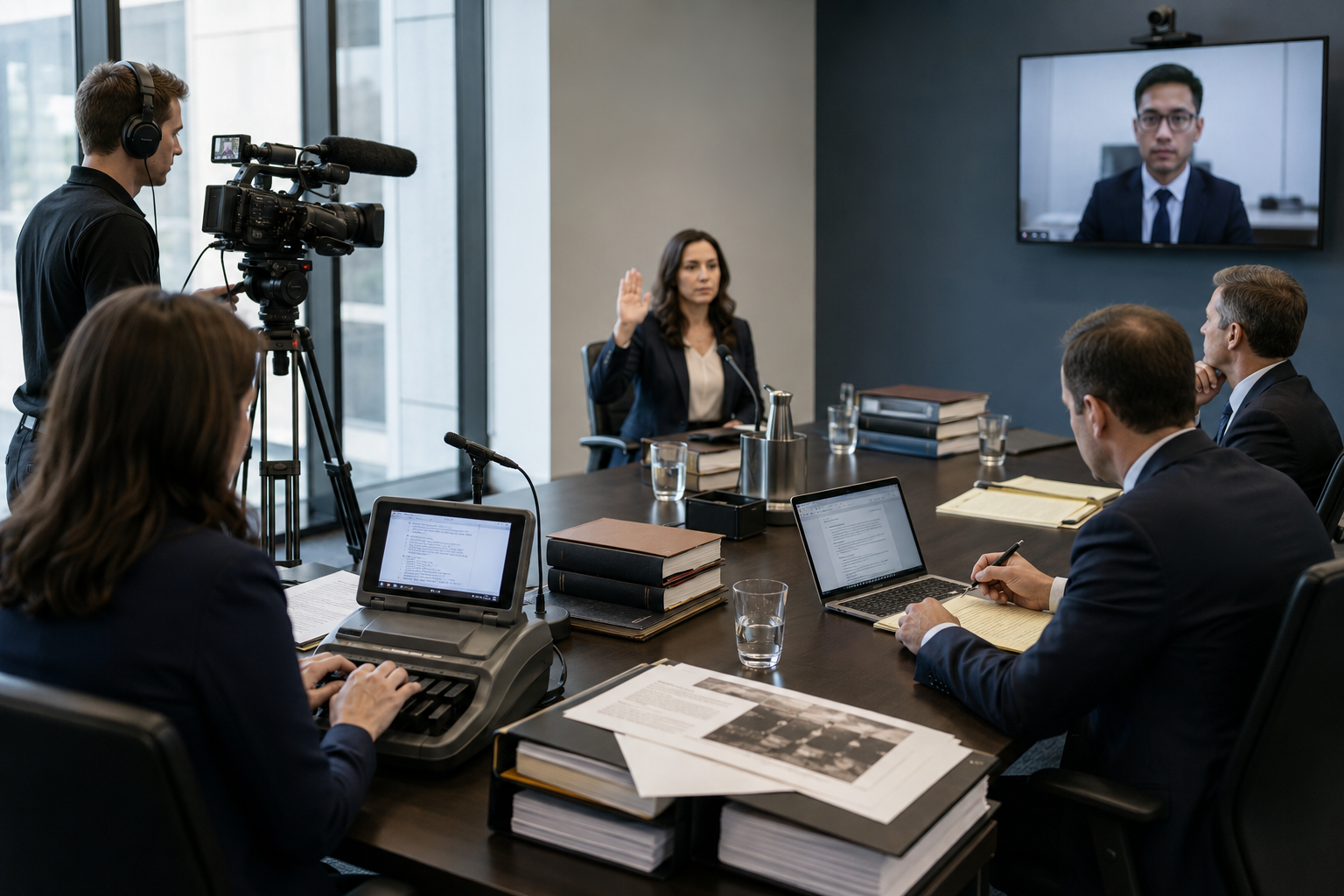
Certified court reporters create the official written transcript of every deposition. They capture testimony verbatim and maintain complete accuracy and neutrality throughout the proceeding. The result is a certified record that meets court standards and can be used in legal proceedings without question.
Legal Videographers
Legal videographers record video testimony according to court and procedural requirements. They capture not just words but also witness demeanor, expressions, and nonverbal communication. This visual record adds important context that a written transcript alone cannot fully convey.
Court Reporting Agencies
Court reporting agencies coordinate both transcript and video services for depositions. They manage exhibits and supporting documentation throughout the process. They also ensure full compliance with applicable rules, giving legal teams confidence that every element of the record is properly handled.
What Types of Deposition Recordings Are Allowed?
Multiple recording methods are used in depositions today, each serving a specific purpose. The right method depends on case complexity, jurisdiction rules, and what the legal team needs. Here is an overview of the most common types.
Stenographic Recording
Stenographic recording is the traditional court reporting method. A certified reporter uses a stenotype machine to capture testimony in real time. This method produces the official written transcript used in legal proceedings and remains one of the most widely accepted forms of deposition documentation.
Video Recording
Video recording captures the full visual testimony of a witness. It is especially common in complex and high-value litigation where witness demeanor and credibility are central to the case. Video evidence also allows legal teams to use deposition footage directly during trial presentations.
Audio Recording
Audio recording may be permitted in certain jurisdictions under specific conditions. However, it has significant limitations compared to professional video and transcript records. It captures spoken words but misses visual cues and nonverbal communication that often carry important meaning during testimony.
Remote Deposition Recording
Virtual proceedings require specialized recording considerations. Zoom-based depositions and other remote platforms must be recorded using compliant tools and methods. Speaker identification, audio clarity, and synchronized documentation all require careful management to produce a reliable record of remote testimony.
Can Attorneys or Parties Record a Deposition Themselves?
This is where many legal professionals run into problems. Attorneys or parties may feel tempted to record a deposition themselves using a phone or personal device. In most jurisdictions, this approach creates serious legal and procedural risks.
Court rules typically require advance notice and consent from all parties before any recording begins. Unofficial recordings often fail to meet these requirements. Even when consent exists, a personal recording may lack the quality, completeness, and chain of custody needed for it to be admissible in court.
Poor audio quality, incomplete captures, and authentication challenges are common problems with unofficial recordings. More importantly, using an unauthorized recording can damage the credibility of the evidence and expose the recording party to legal objections. Professional recording eliminates all of these risks. It produces a reliable, accurate, and fully admissible record every time.
What Are the Benefits of Professionally Recording a Deposition?
Professional deposition recording does far more than simply capture what was said. It protects the legal record and strengthens how your team prepares and presents its case. Here is why it matters.
- Creates a Verbatim Record: Every word of testimony is accurately preserved. Disputes about what a witness actually said become much harder to sustain when a certified verbatim record exists.
- Captures Witness Credibility: Video recording captures tone, pauses, hesitations, and body language. These nonverbal elements are often just as important as the words themselves during trial preparation and cross-examination.
- Improves Case Review: Legal teams collaborate more efficiently when they have clear, organized records to work from. Reviewing testimony and identifying key moments becomes faster and more focused.
- Supports Trial Presentation: Synchronized video and transcripts allow attorneys to present deposition testimony powerfully in the courtroom. Judges and juries respond to well-organized, visual presentations of evidence.
What Technology Is Used to Record Depositions Today?
Deposition recording has evolved significantly beyond the stenotype machine. Today’s tools combine speed, accuracy, and security in ways that were not possible even a few years ago. Here is what modern recording technology looks like in practice.
- AI-Assisted Court Reporting: AI-powered tools enhance transcription efficiency and workflow throughout the recording process. Human oversight and quality control remain central to ensure every transcript meets the accuracy standards legal proceedings demand.
- Video-to-Text Synchronization: Modern platforms link transcript lines directly to matching video moments. Legal teams click a line and instantly see the corresponding footage, making case review faster and cross-examination preparation far more precise.
- Secure Digital Storage: All transcripts, exhibits, and videos are stored in protected online repositories. Legal teams access every case file from any device at any time, with controlled permissions keeping sensitive data safe and organized.
Record Your Deposition the Right Way with CourtScribes
One decision at the start of your deposition shapes everything that follows. Choosing a professional, experienced court reporting service means your record is accurate, admissible, and ready when you need it. CourtScribes delivers AI-powered court reporting, professional legal videography, remote deposition support via Zoom, video-to-text synchronization, and secure online access to all your case files.
Do not leave your deposition record to chance. Schedule with CourtScribes today and get the professional recording your case deserves.
 Toll-Free: 833-SCRIBES
 scheduling@courtscribes.com
billing@courtscribes.com