
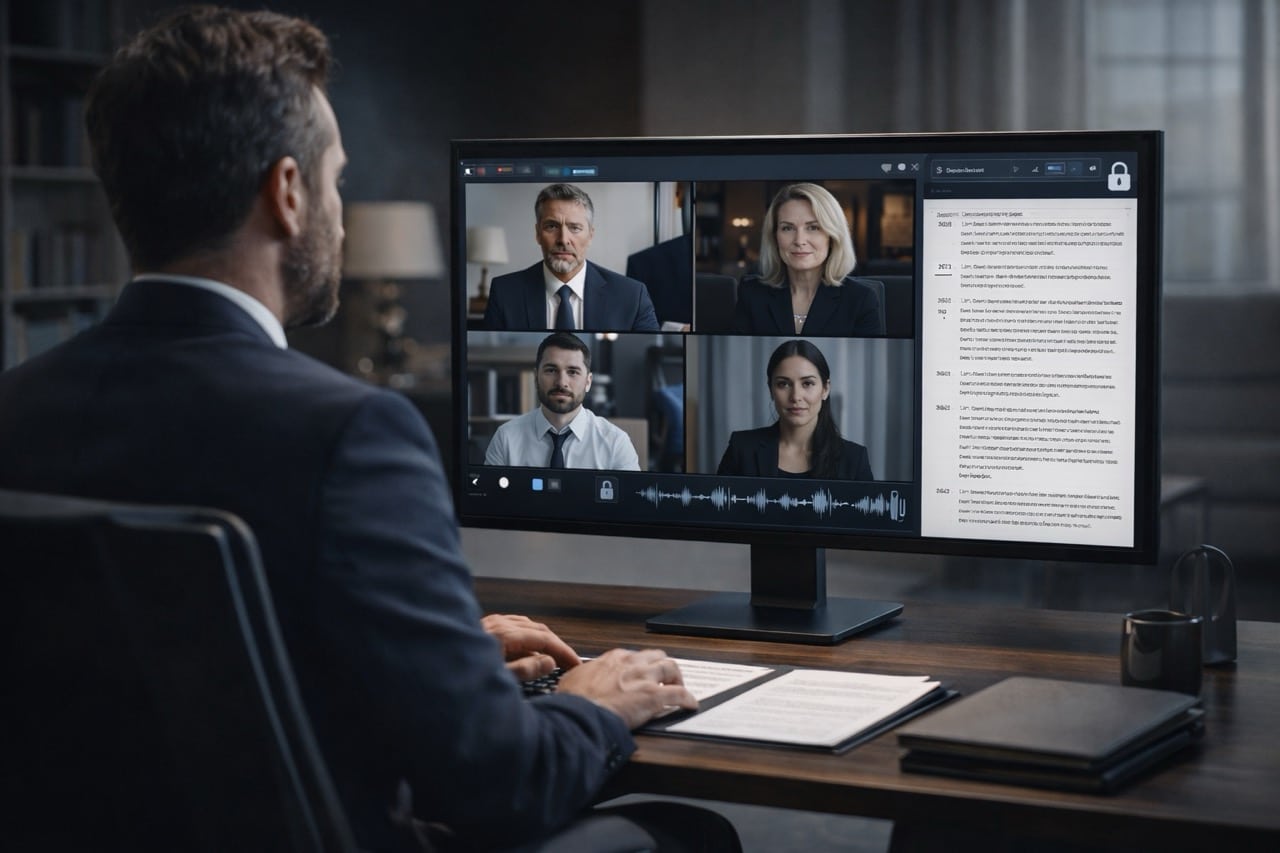
Are Zoom Depositions Legally Valid for Court Proceedings?
Virtual depositions transformed legal practice dramatically after 2020 when courts embraced remote proceedings. Attorneys now conduct testimony from offices without expensive travel or scheduling complications. Zoom depositions enable flexible witness participation across all jurisdictions nationwide.
However, proper procedures remain essential for court admissibility and professional documentation standards. Certified court reporters ensure transcript accuracy that courts accept without authentication challenges. Additionally, professional services protect confidentiality through encrypted platforms and secure protocols.
Can Depositions Be Done on Zoom Under U.S. Law?
Yes, depositions can be done on Zoom in most jurisdictions under current federal rules. Courts adopted remote depositions widely following 2020 pandemic disruptions to traditional legal proceedings. Virtual testimony now represents standard practice rather than exceptional circumstances requiring special permission.
Federal and state courts recognize Zoom depositions as valid when proper procedures are followed. Professional court reporters create official transcripts that meet identical standards as in-person proceedings. However, specific rules vary by state and individual court orders may impose additional requirements.
Certified court reporters still matter critically in Zoom depositions for accuracy and admissibility protection. Remote depositions require identical professional documentation as traditional formats under legal standards. Additionally, online legal proceedings maintain courtroom formality despite virtual platforms and geographic separation.
When Courts Allow Zoom Depositions
Attorneys worry about admissibility and compliance when choosing virtual deposition formats unnecessarily. Federal Rule of Civil Procedure 30(b)(4) explicitly permits remote depositions by telephone or other means. Courts recognize technological advances that enable professional testimony collection without physical presence.
State court acceptance of Zoom depositions varies but generally follows federal guidance for consistency. Some jurisdictions require stipulations between parties or court approval for remote proceedings. Additionally, emergency situations and scheduling flexibility benefits support widespread judicial acceptance.
Zoom depositions solve practical problems that traditional formats cannot address efficiently or economically. Out-of-state witnesses participate without travel expenses or extended work absences. Furthermore, tight litigation timelines benefit from flexible scheduling that accommodates multiple time zones. Courts prioritize testimony access over format preferences when proper documentation standards are maintained.
How Zoom Depositions Work in Practice
Virtual depositions follow structured procedures that maintain professional standards throughout testimony collection. Proper planning ensures technical reliability and legal compliance during critical case moments. Understanding the process helps attorneys prepare effectively for successful Zoom depositions.
Here’s how the process works step by step:
- Scheduling the Zoom deposition involves coordinating participants, confirming technical requirements, and distributing platform links
- Role of the court reporter includes oath administration, real-time transcription, and official record creation
- Oath administration remotely establishes legal authority for testimony through virtual swearing-in procedures
- Recording and transcript creation capture complete testimony through professional equipment and certified documentation
Zoom serves as the platform while certified court reporters provide actual reporting services. The platform facilitates communication but professionals create admissible legal documentation.
Do Zoom Depositions Produce Court-Admissible Transcripts?
Many assume Zoom recordings alone are sufficient for legal proceedings without professional documentation. However, platform recordings do not constitute official transcripts that courts accept as evidence. Professional certification remains mandatory regardless of recording technology or platform features.
Certified court reporters create official transcripts through professional training and verification processes. Formatting, certification, and neutrality standards require human expertise that automated systems lack. Additionally, AI-only transcripts fail admissibility requirements because they lack professional verification.
Courts reject uncertified documentation that cannot verify accuracy or professional responsibility standards. Zoom depositions require identical professional court reporting as traditional in-person proceedings. Furthermore, proper certification protects transcript admissibility during trial and appellate review processes.
Accuracy and Confidentiality in Zoom Depositions
Poor audio quality, speaker interruptions, and unstable connections compromise transcript accuracy significantly. Background noise and technical glitches create transcription errors that affect case preparation quality. Professional reporting protects the official record through expertise and proper equipment.
Confidentiality requirements in remote proceedings match traditional deposition standards exactly. Virtual platforms require encryption and access controls that prevent unauthorized testimony access. Additionally, professional court reporters implement security protocols throughout documentation processes.
How CourtScribes Protects Zoom Deposition Records
CourtScribes maintains comprehensive security measures that protect confidential testimony during virtual proceedings:
- Encrypted audio and video capture prevents interception during transmission and storage phases
- Secure online transcript repository provides controlled access through authentication and permission management
- Restricted access permissions limit file viewing to authorized case participants only
- Certified human review of transcripts ensures accuracy that automated systems cannot provide
- Chain-of-custody protection maintains evidence integrity for admissibility and appellate requirements
Professional Zoom depositions require these security measures for complete confidentiality protection.
Advantages of Zoom Depositions for Attorneys
Virtual depositions provide substantial benefits that traditional proceedings cannot match efficiently or economically. Modern legal practice demands flexibility that Zoom depositions deliver consistently.
Key advantages include:
- Reduced travel costs eliminate attorney and witness expenses for transportation and accommodation
- Faster scheduling accommodates busy calendars without coordinating multiple participant travel arrangements
- Out-of-state witness access enables testimony from geographically distant individuals without delay
- Easier expert testimony allows specialists to participate without disrupting professional schedules
- Improved case efficiency accelerates litigation timelines through flexible virtual proceedings
Benefits of Zoom depositions for attorneys extend beyond cost savings to strategic advantages. Virtual proceedings enable better case management and witness coordination throughout complex litigation.
Common Mistakes Attorneys Make with Zoom Depositions
Relying on Zoom recordings alone represents the most common mistake attorneys make currently. Platform recordings lack professional certification that courts require for transcript admissibility. Not hiring a certified court reporter creates documentation gaps that compromise case preparation.
Ignoring security requirements exposes confidential testimony to unauthorized access and potential breaches. Failing to test audio and video before proceedings causes technical problems during testimony. Additionally, inadequate preparation undermines witness credibility and professional presentation quality.
These mistakes affect admissibility by creating grounds for transcript challenges and evidentiary disputes. Zoom depositions require identical professional standards as traditional proceedings without exception. Furthermore, proper planning prevents common errors that compromise virtual deposition effectiveness.
Why Law Firms Trust CourtScribes for Zoom Depositions
CourtScribes employs certified remote court reporters who maintain the highest professional standards nationwide. Our nationwide coverage ensures consistent service quality regardless of case location or complexity. Professional legal videography services capture witness credibility that transcripts alone cannot convey.
Video-to-text synchronization links testimony moments to exact transcript locations for efficient review. Secure transcript delivery protects confidential materials through encrypted platforms and access controls. Additionally, comprehensive support includes technical assistance throughout virtual proceeding preparation.
Law firms trust CourtScribes for Zoom depositions because we understand virtual proceeding requirements completely. Our experienced team delivers reliability that attorneys depend on for critical cases.
Schedule a Zoom Deposition with CourtScribes
Zoom depositions are valid when done correctly with professional court reporting and security measures. Accuracy, security, and certification matter critically for court admissibility and case success. CourtScribes ensures compliance nationwide through certified reporters and comprehensive virtual deposition services.
Contact us today to schedule professional Zoom depositions that meet all legal requirements and documentation standards.
📞 Toll-Free: 833-SCRIBES
📧 scheduling@courtscribes.com
📧 billing@courtscribes.com