
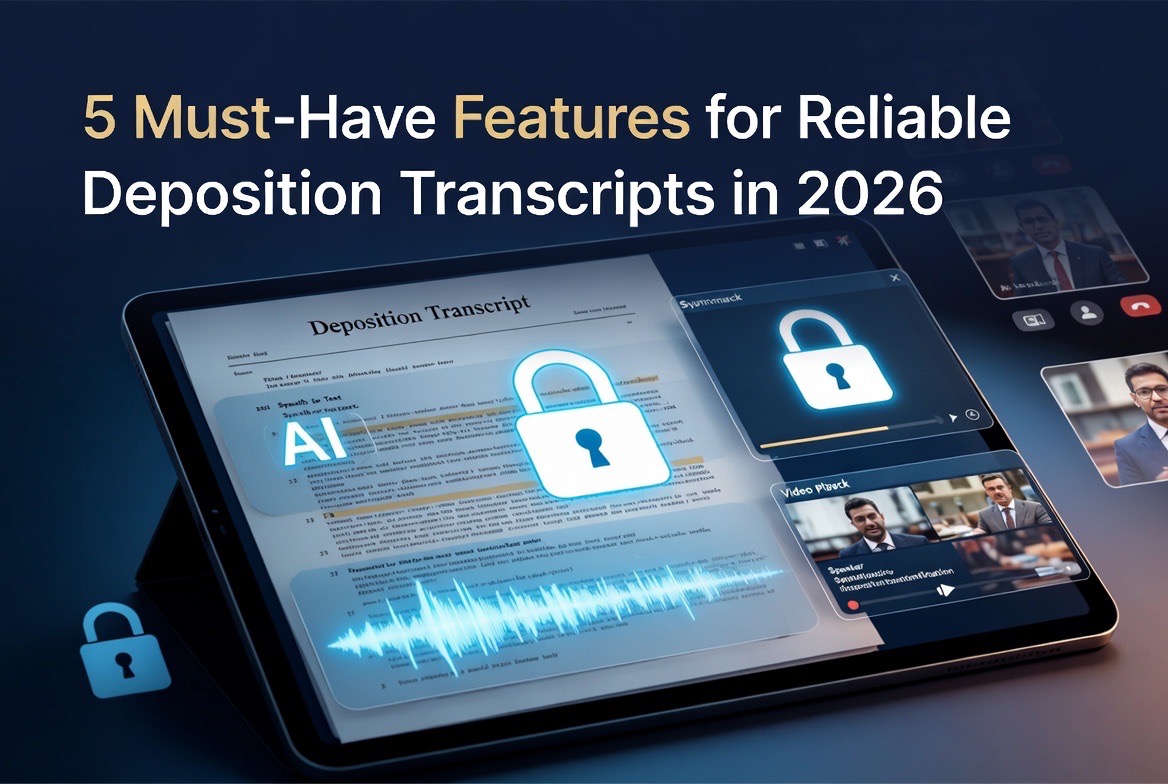
What Makes a Deposition Transcript Truly Reliable in Today’s Legal World: 5 Must-Have Features
Legal professionals know that even small transcript errors can disrupt case preparation. Misinterpreted testimony or missing details can weaken arguments and delay progress. Even a low error rate can impact how a case is built. Legal workflows are evolving quickly. AI and digital tools now shape how information is captured, reviewed, and used in legal proceedings. Court reporting has changed significantly in recent years. But not every transcript meets today’s standards.
In 2026, a high-quality deposition transcript requires more than just written words. It demands accuracy, speed, security, and technology working together seamlessly. Let’s explore the five must-have features every legal team should expect.
AI-Powered Accuracy and Real-Time Speech-to-Text Precision
Accuracy defines every great deposition transcript. A single error can weaken a legal argument or change a case outcome. Verbatim records must capture every word exactly as spoken.
AI-powered speech-to-text technology changes how transcription works. It captures spoken language in real time. It reduces human error and speeds up the entire process. Legal teams no longer have to wait days for a rough draft. The technology delivers consistent formatting from the start. Attorneys can trust the transcripts they receive. Even in complex, fast-moving proceedings, AI tools maintain precision. Minimal corrections are needed. Reliable results come every time.
Clear Speaker Identification in Complex and Remote Depositions
Depositions rarely involve just two people. Attorneys, witnesses, interpreters, and multiple parties all speak during a single session. Keeping track of every voice is critical. Remote court appearances add another layer of difficulty. Virtual settings create overlapping dialogue. Background noise and connection issues make identification harder.
A high-quality transcript solves this problem directly. It includes accurate speaker labels throughout the document. Every line of dialogue is clearly attributed to the right person. This makes case review much easier. Legal teams can follow the conversation without confusion. Organized dialogue flow saves time and reduces errors during preparation.
Seamless Video-to-Text Synchronization for Stronger Case Review
A transcript captures words. A video captures everything else. Tone, pauses, and physical reactions add important context to testimony. Legal teams need both to build a complete picture of what happened.
Video-to-text synchronization connects transcript lines directly to specific video moments. Attorneys can click a line and instantly see the matching footage. Evidence review becomes faster and more focused. This feature strengthens trial preparation significantly. Attorneys build stronger arguments when they can see and read testimony together. It also enhances how they present evidence during hearings. Judges and juries respond to well-organized, visual presentations.
Fast Turnaround Without Compromising Quality
Legal cases run on tight deadlines. Court schedules do not wait. Attorneys need transcripts quickly after a deposition ends. Digital court reporting makes fast delivery possible. Automated transcription processes reduce the time between recording and final document. Streamlined workflows eliminate unnecessary delays.
Modern services provide reliable delivery timelines that legal teams can count on. Speed does not mean cutting corners. Accuracy and formatting stay consistent even with faster turnaround. Legal professionals can prepare for the next step in their case without waiting days for documentation. Efficiency is built into every part of the process.
Secure and Searchable Online Access to Transcripts and Case Files
Legal teams today work across multiple locations and devices. Attorneys, paralegals, and co-counsel need access to the same files at any time. A private online repository makes this possible. It stores transcripts, exhibits, and videos in one organized place. Every file is sorted by case for easy navigation.
Accessing the right document takes seconds, not hours. Security is equally important. Sensitive legal data must stay protected at all times. Reliable storage and controlled access keep confidential information safe. In 2026, searchable and secure online access is not optional. It is a basic requirement for any court reporting service worth trusting.
What Makes a Deposition Transcript Truly Reliable in Today’s Legal World
All five features work together inside a strong digital court reporting solution. AI-powered reporting delivers verbatim accuracy from start to finish. Remote appearance support keeps complex depositions organized. Professional legal videography adds visual context to every transcript. Secure online access puts case files exactly where legal teams need them.
These features combine to create a service that is efficient, accurate, and built for modern legal work. Legal professionals deserve tools that match the speed and demands of today’s cases. Digital court reporting delivers exactly that.
Choosing the Right Court Reporting Partner in 2026
Transcript quality directly impacts how cases are prepared and won. Legal professionals must look for all five features when choosing a court reporting service. Not every provider offers them.
CourtScribes delivers AI-powered accuracy, fast turnaround, clear speaker identification, video-to-text synchronization, and secure online access. Everything your case needs is in one place. Schedule your next deposition with CourtScribes today.
Toll-Free: 833-SCRIBES
scheduling@courtscribes.com
billing@courtscribes.com